WEDGE · The point of it
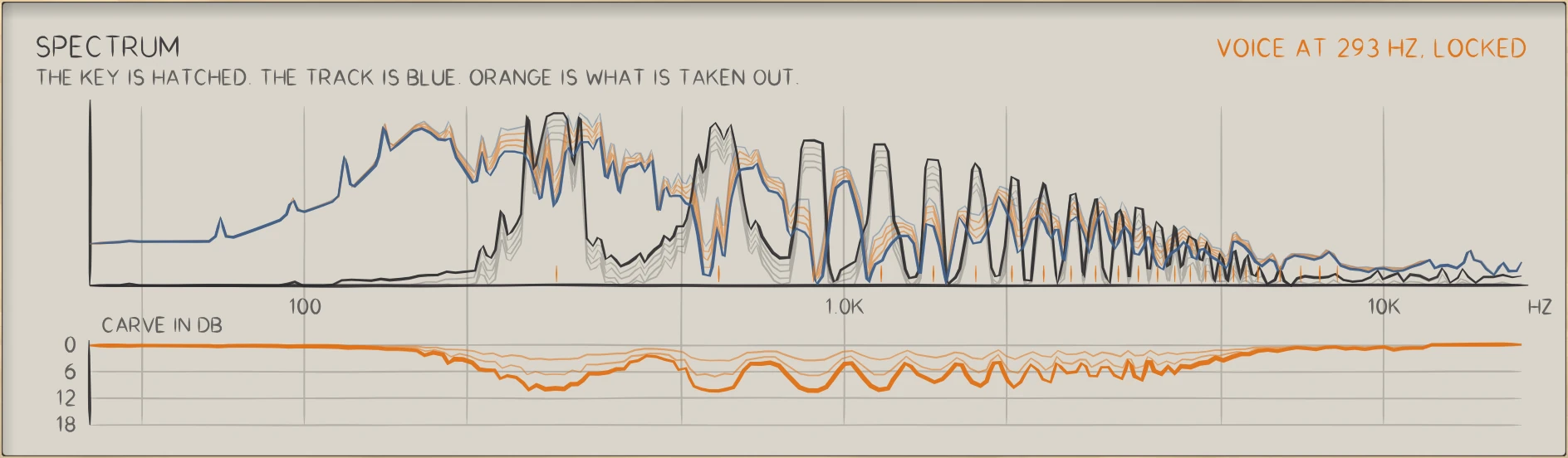
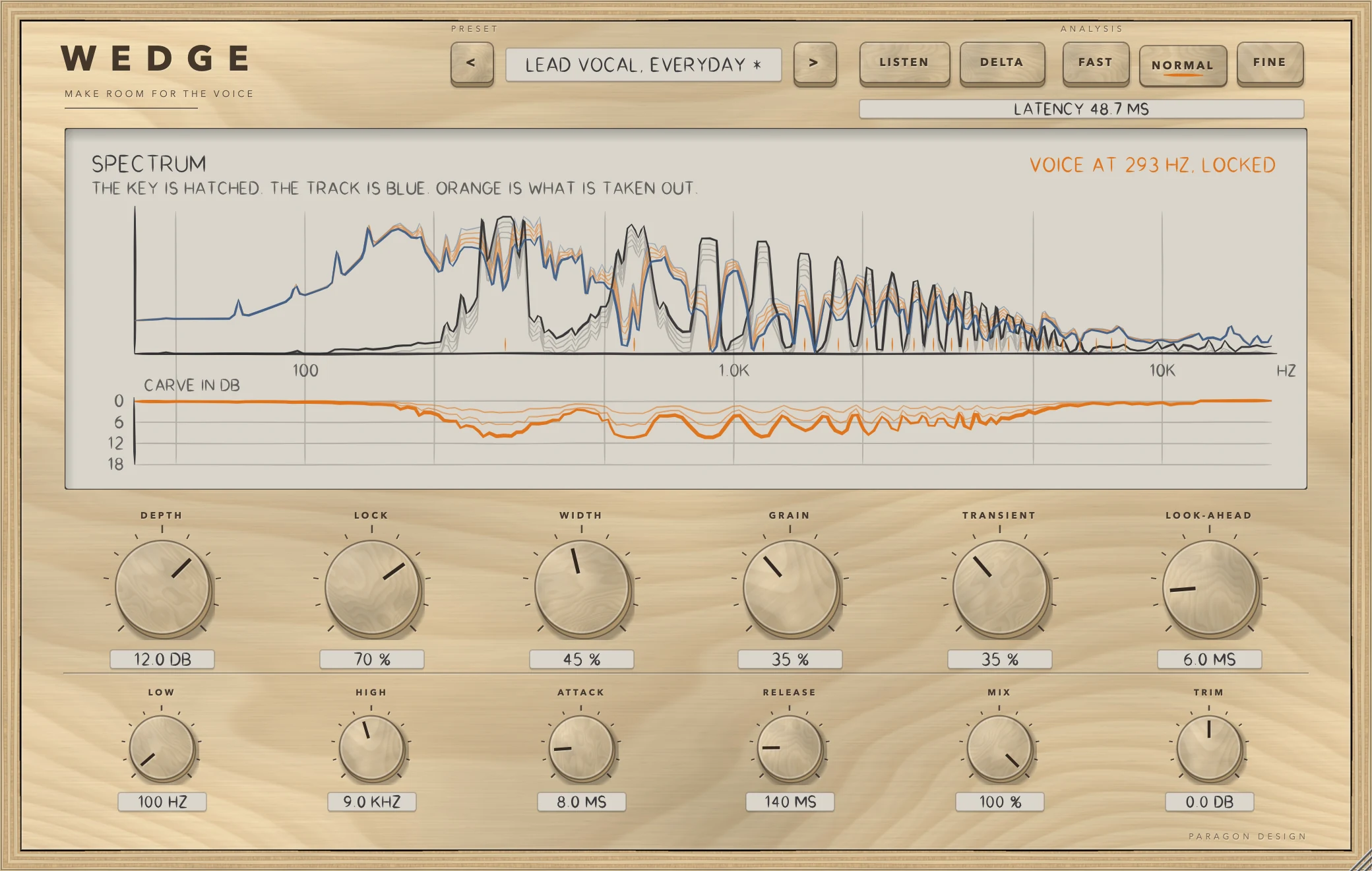
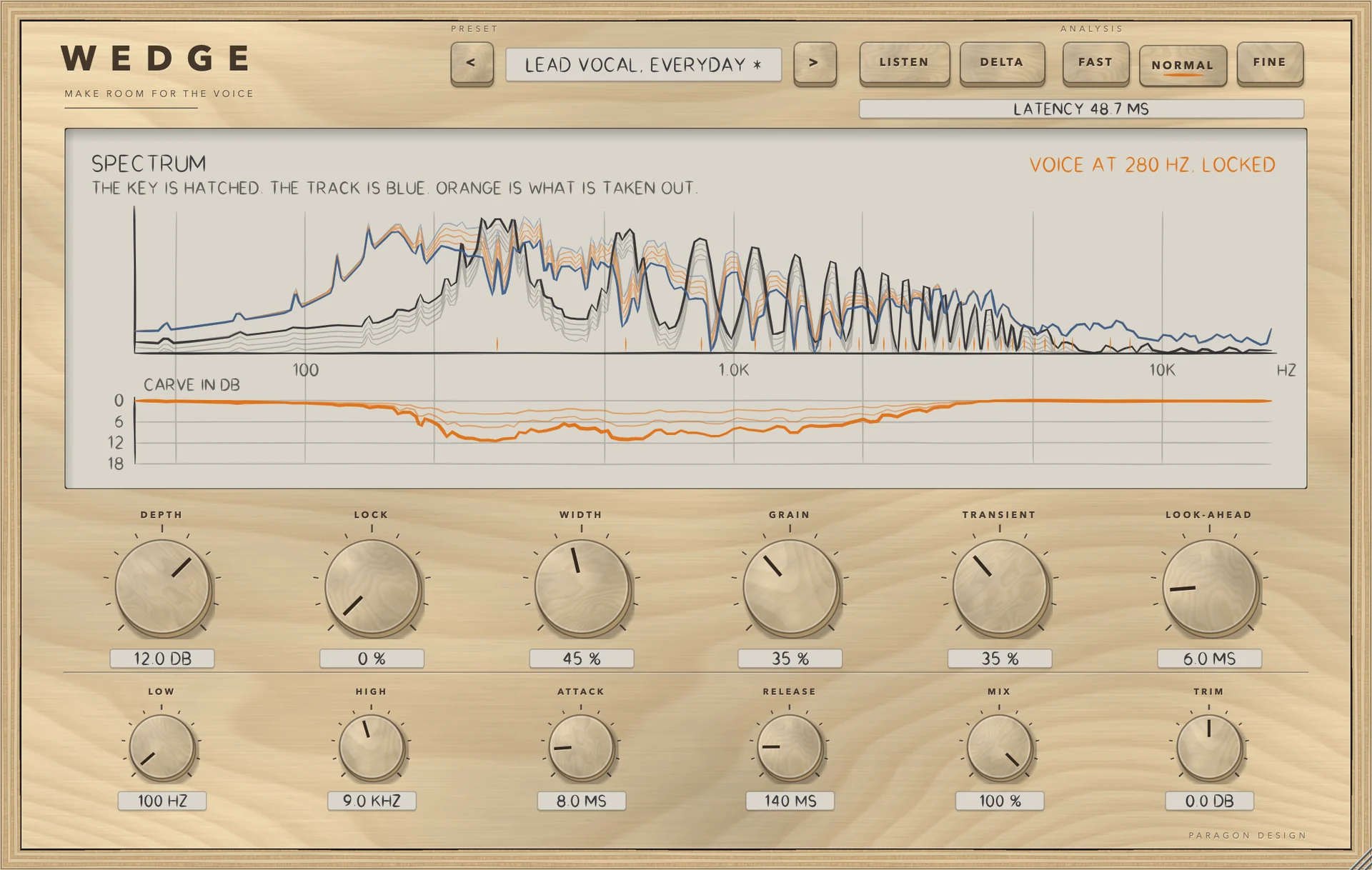
The carve follows the voice's own partials.
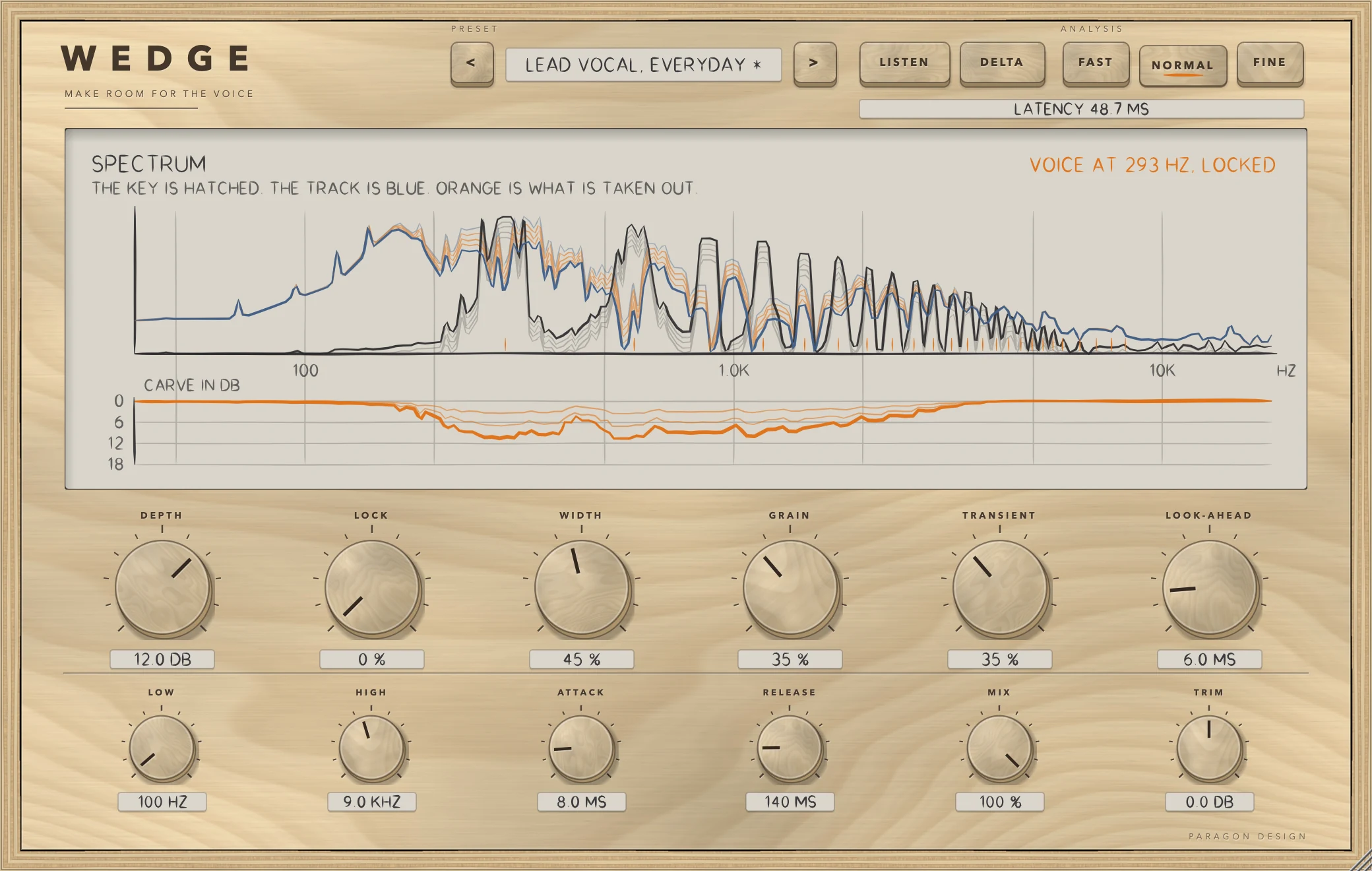
A broad dip in the mids makes room, and makes the pad thin everywhere the voice is not. WEDGE looks at the key signal frame by frame, reads its pitch, and puts narrow notches on the track at the key's partials. The body of the track in between is left alone.
When the voice glides, the notches glide with it: over a glide from 150 to 250 Hz (about three quarters of an octave) the worst pitch error was 0.33 percent. When the key is not pitched, a breath or a consonant, the carve becomes a broad band so nothing is missed.
- 11.9 dBTaken out of the key's band by a 12 dB carve, with 0.0 dB out of 150 to 300 Hz.
- 7.4 dBBetween the partials and the gaps: 9.7 dB against 2.3 dB at LOCK 100.