CASK · The point of it
It draws the room it is making, and it adds nothing until you ask.
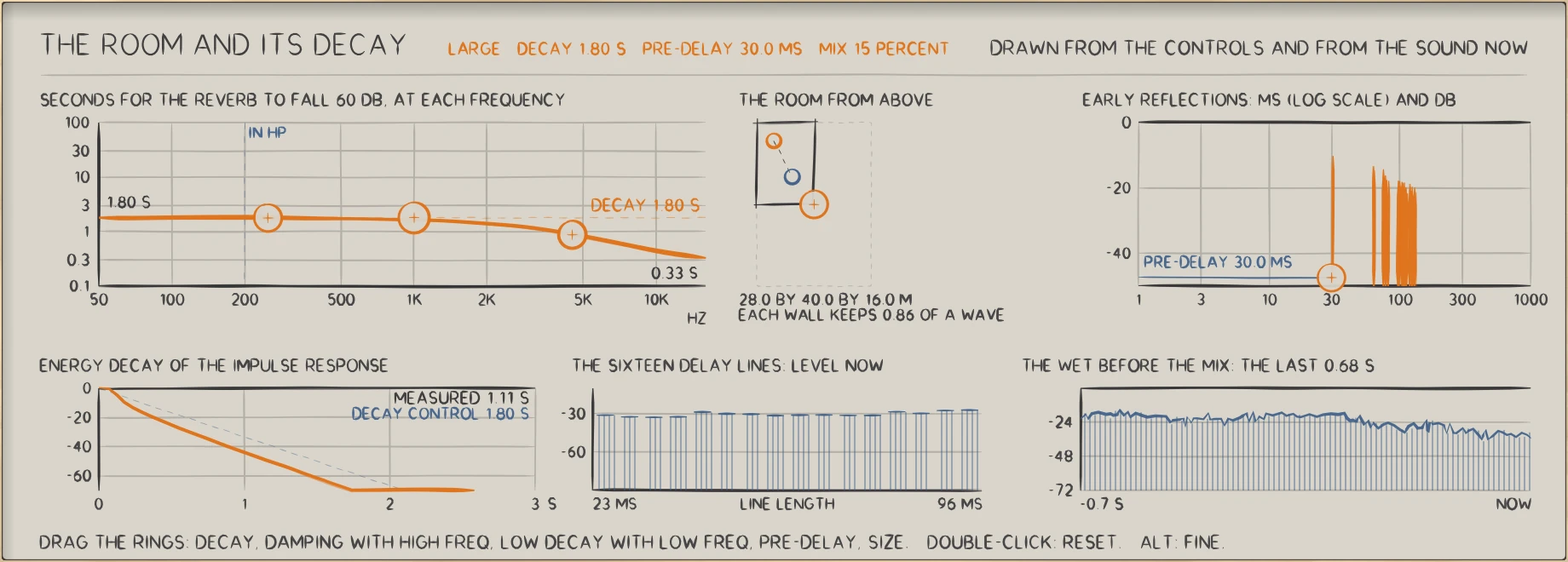
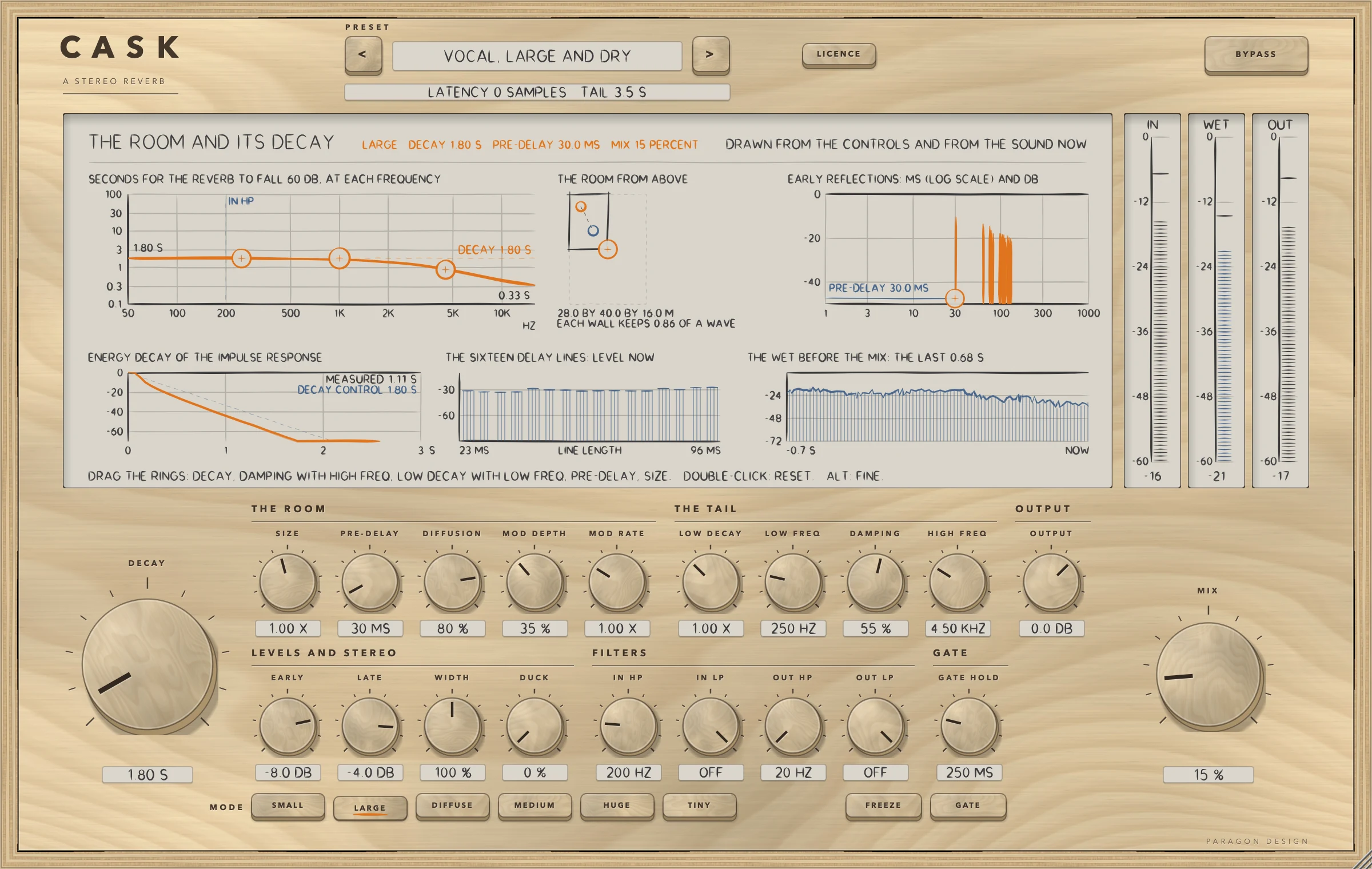
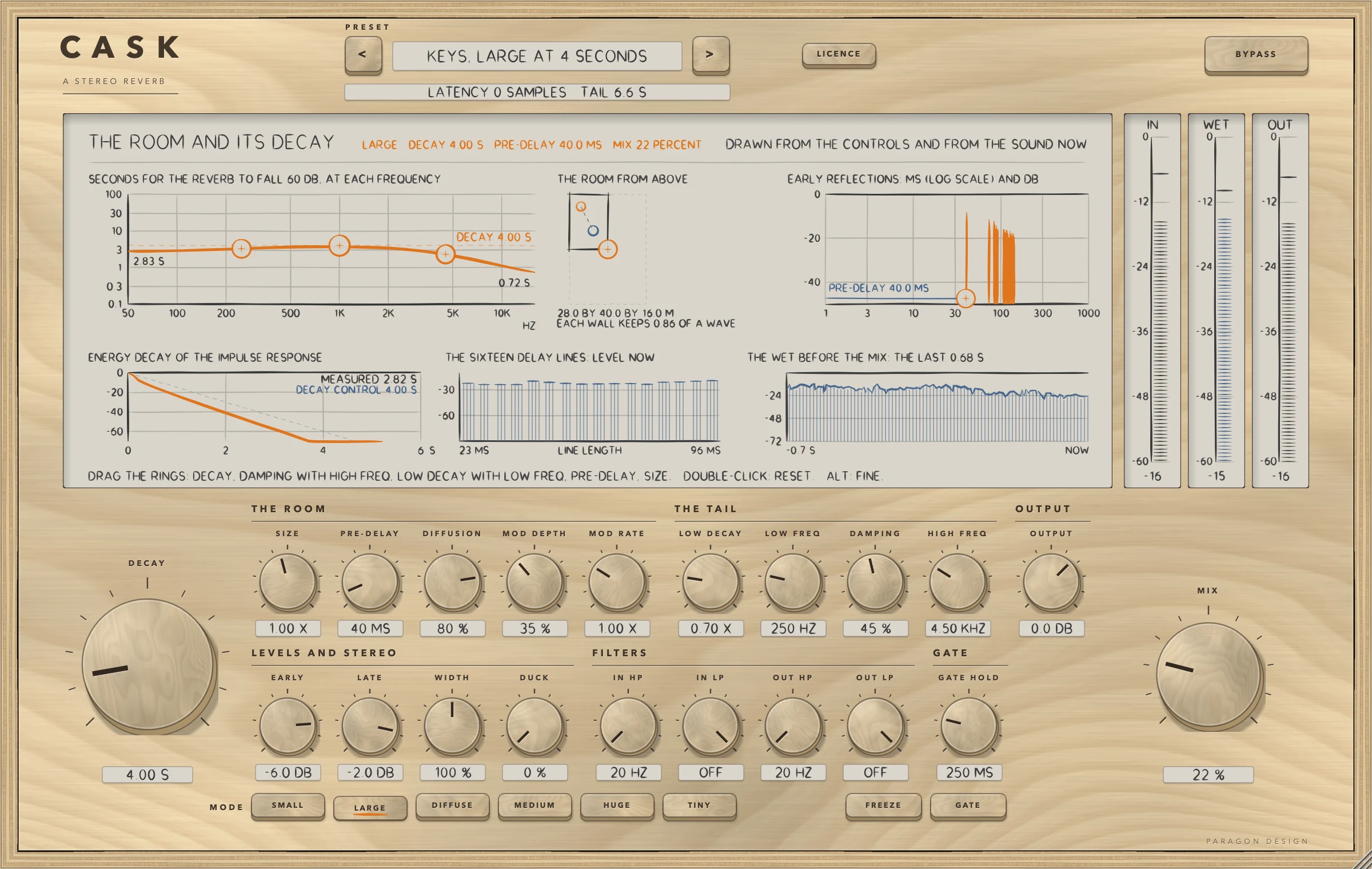
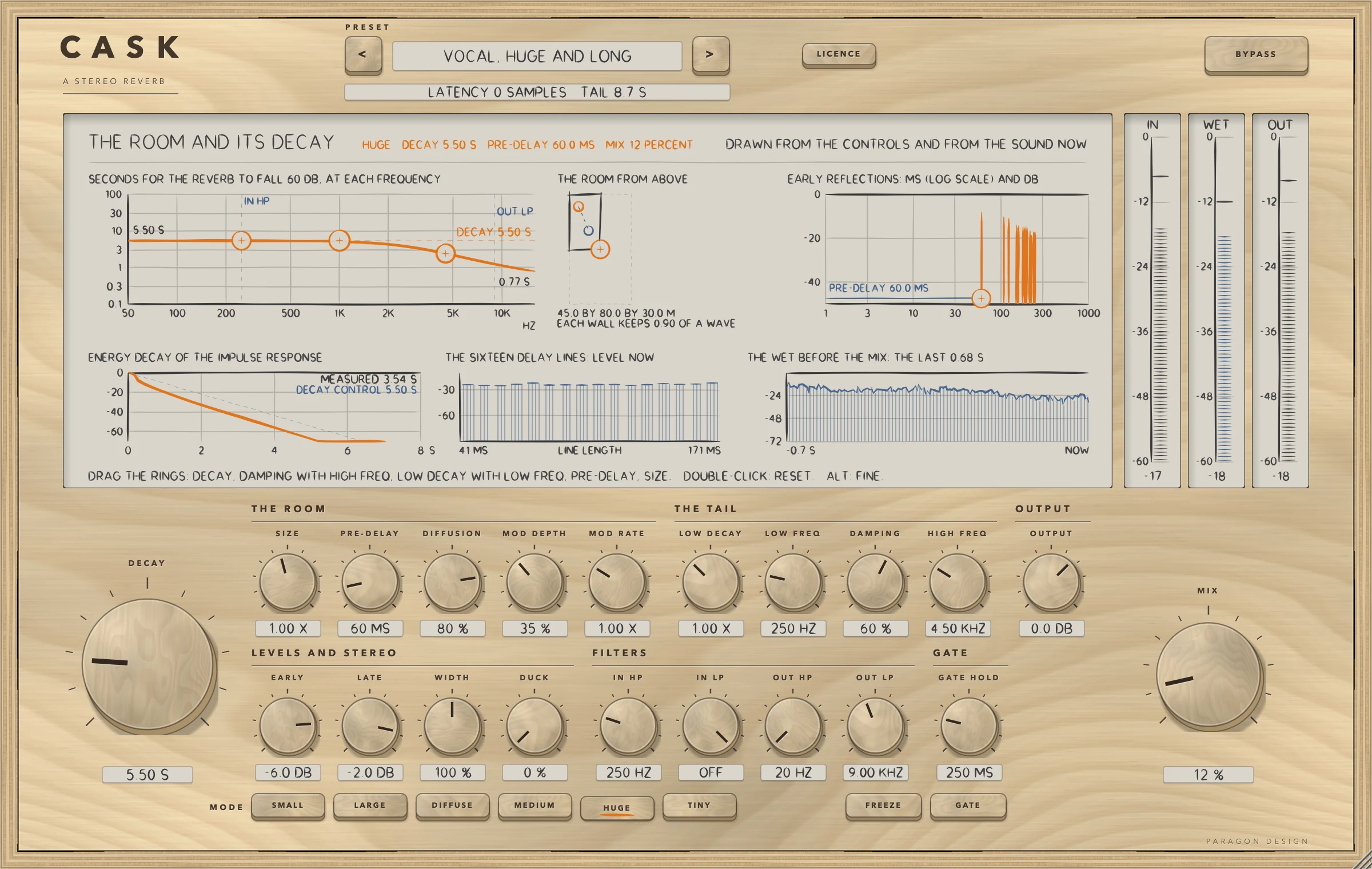
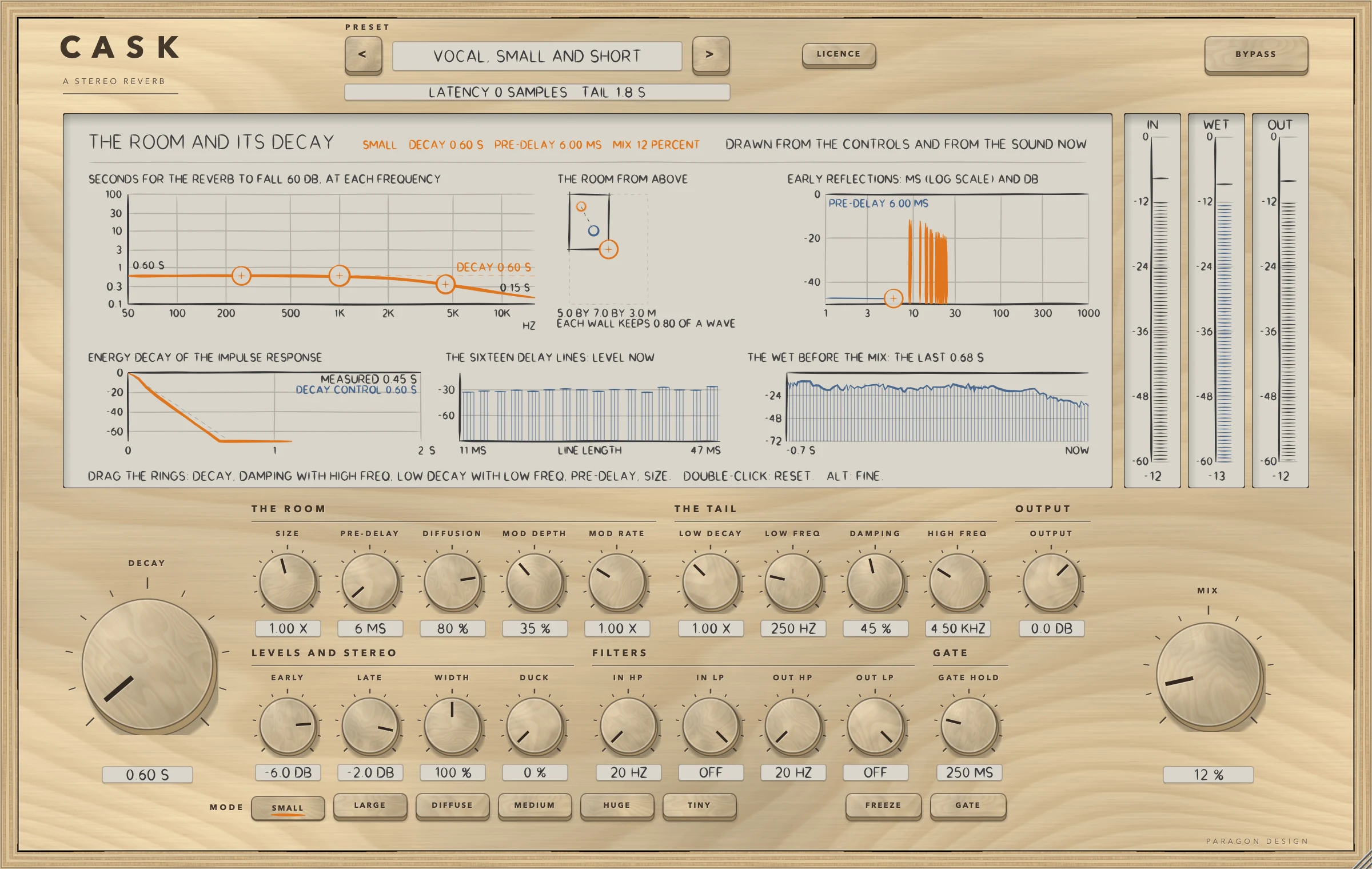
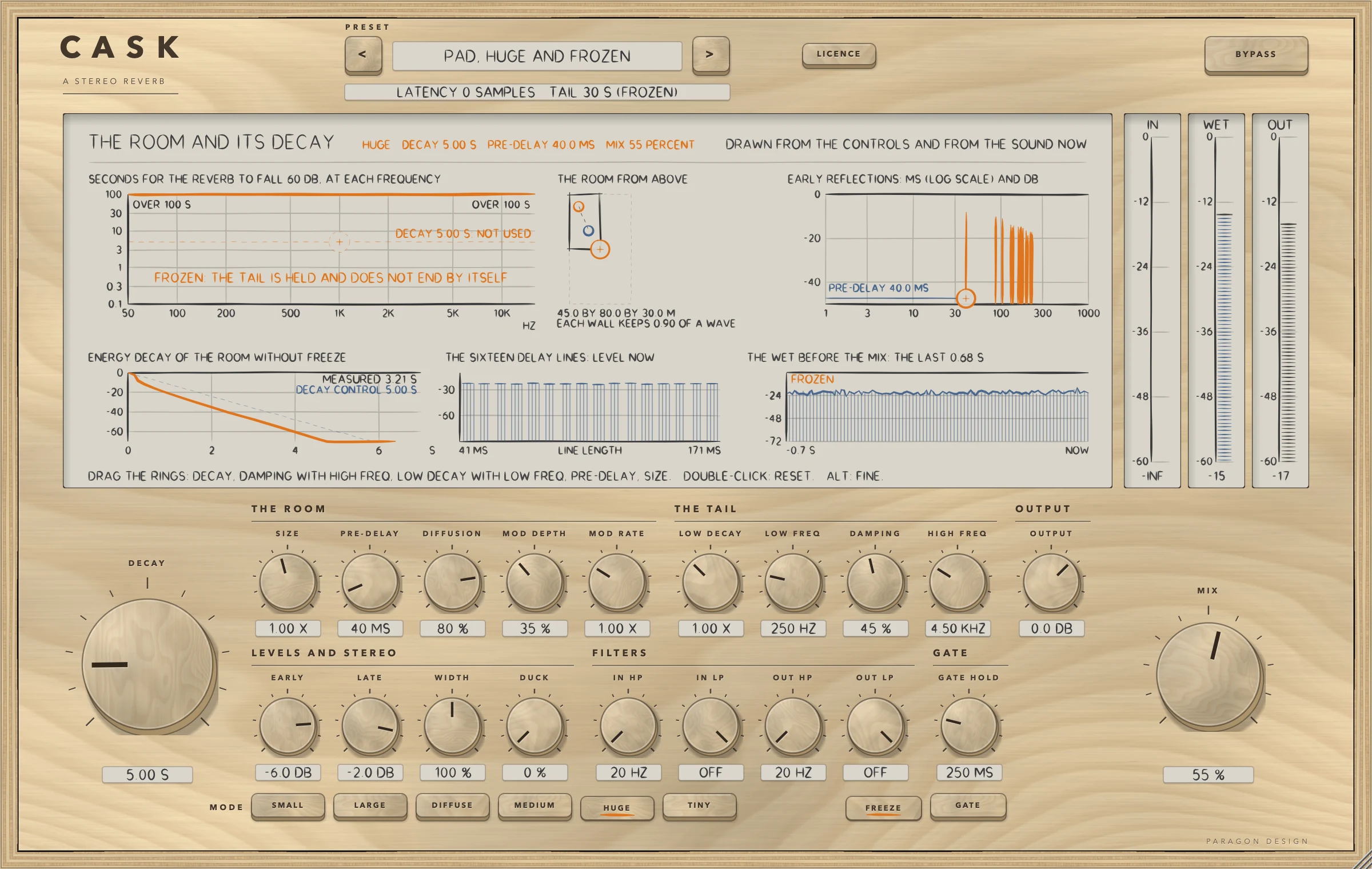
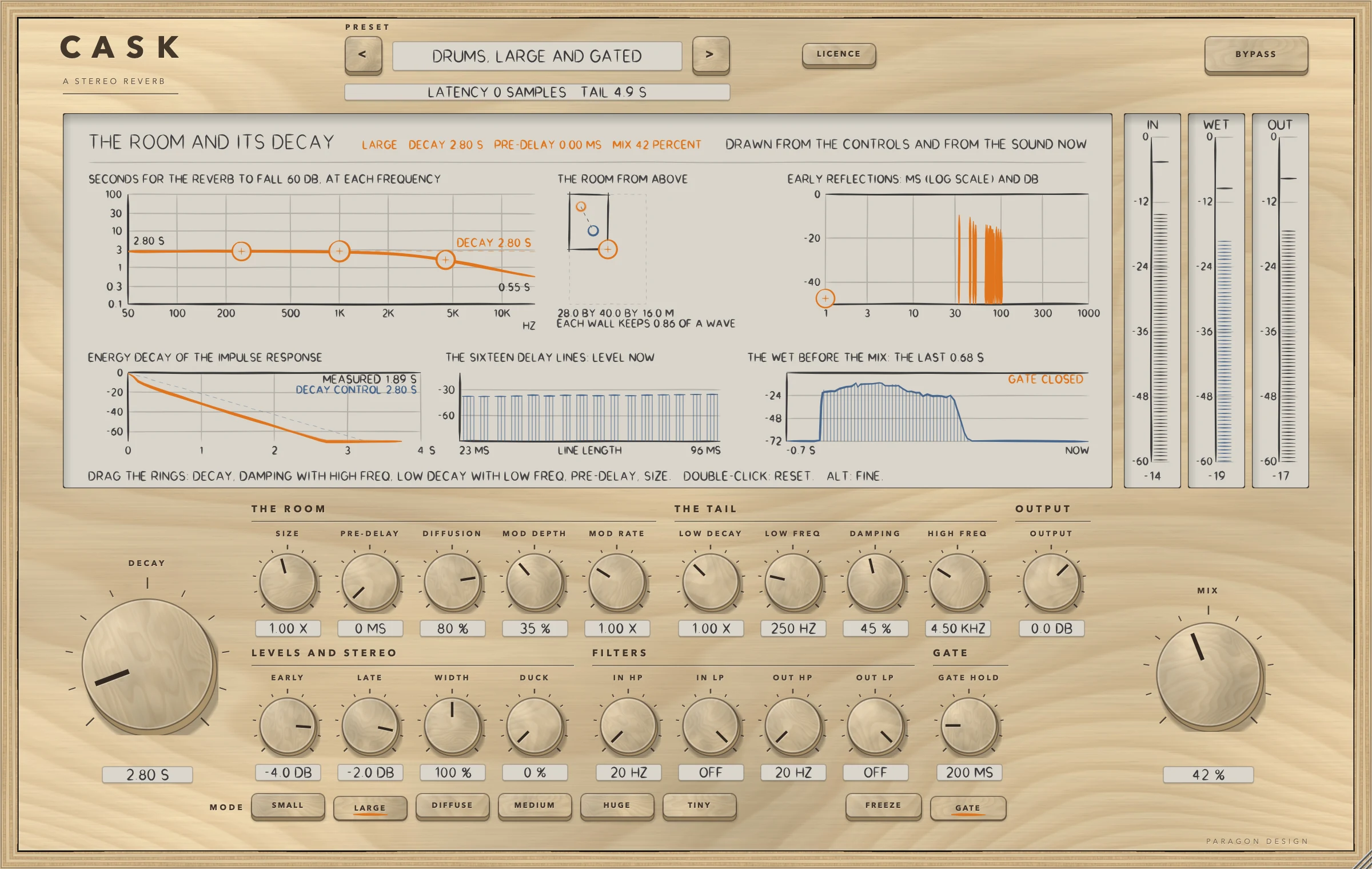
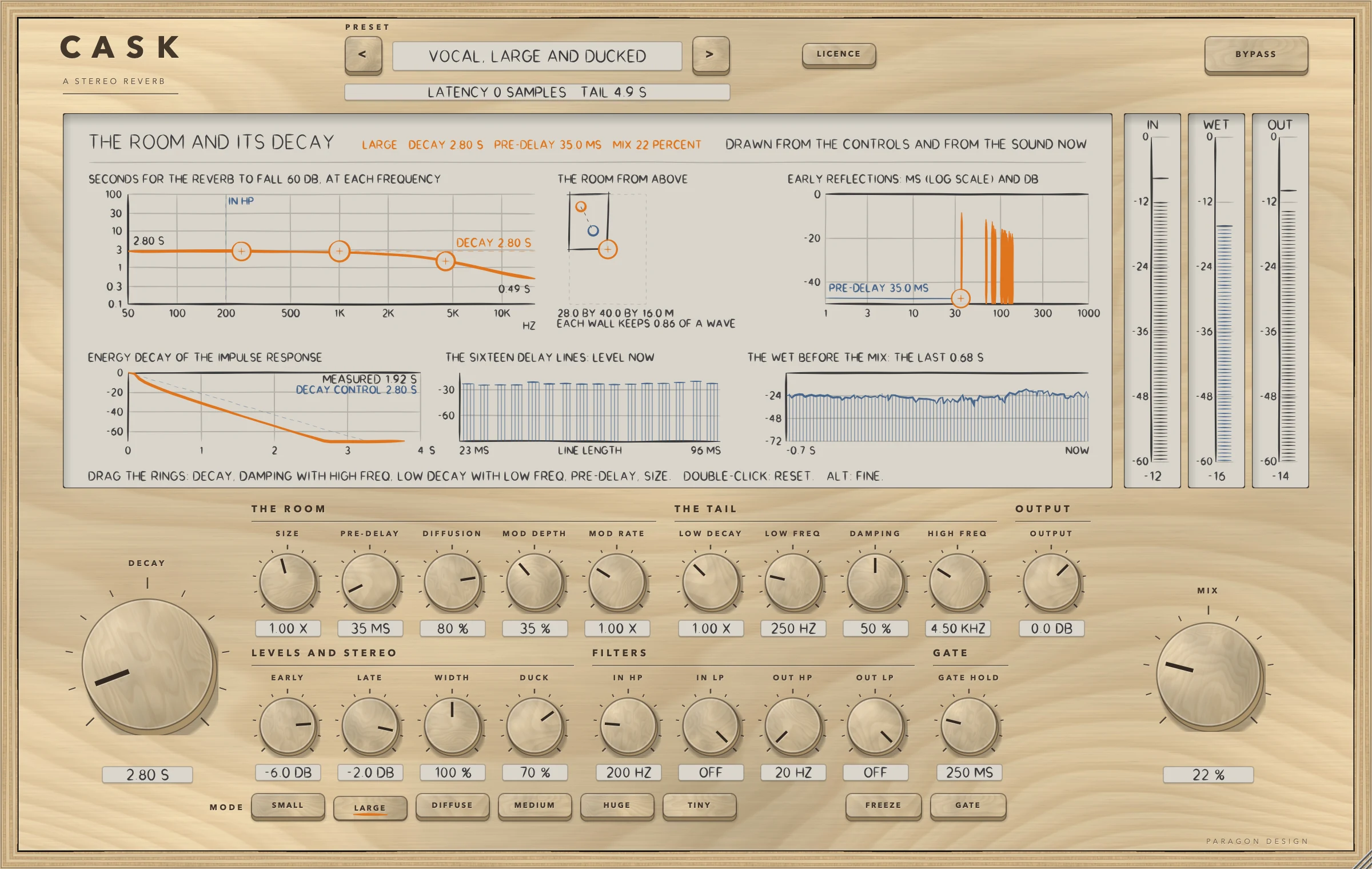
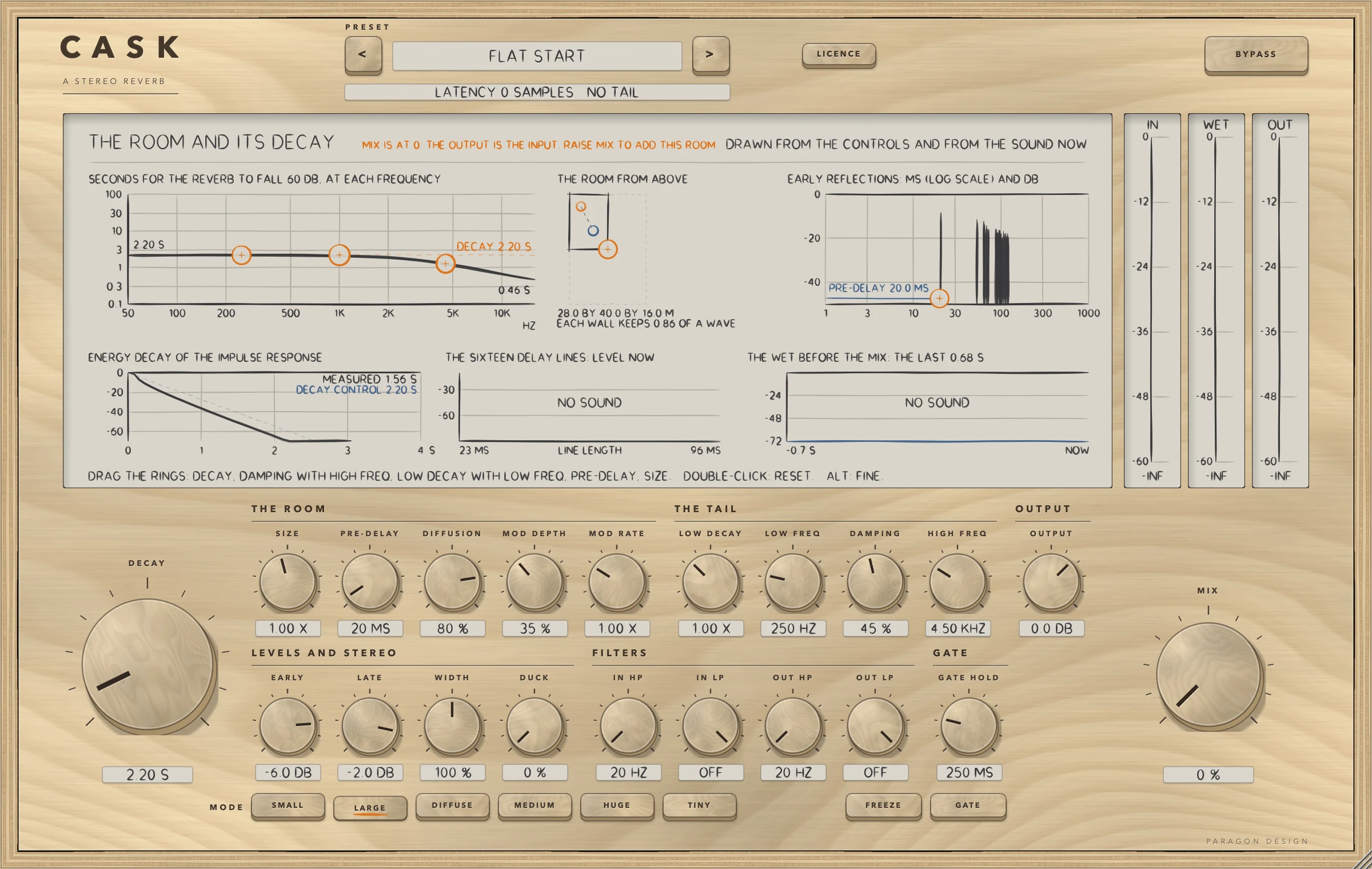
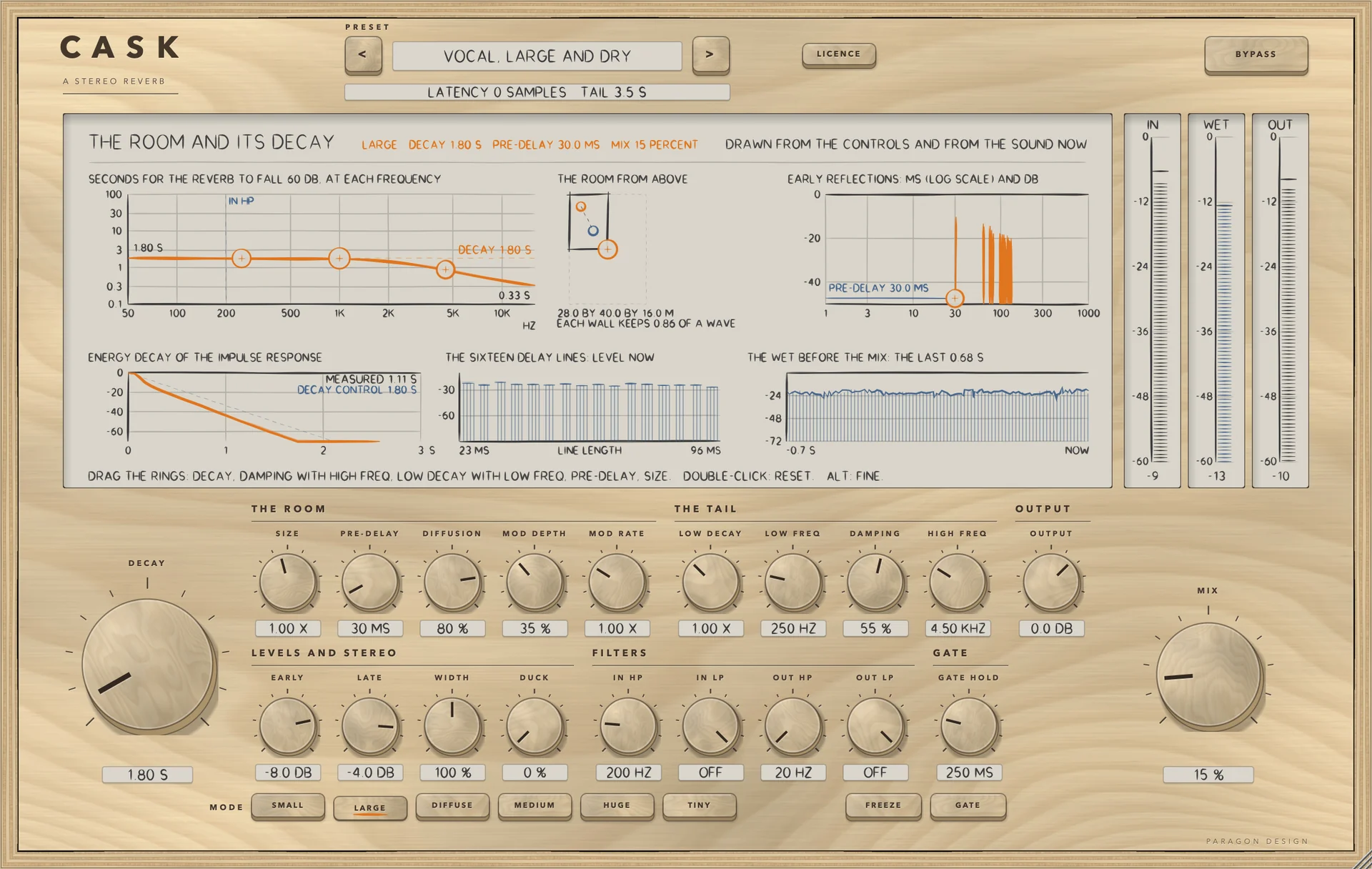
The display is six pictures from numbers the engine computes: the seconds to fall 60 dB at each frequency, the room from above with its three sides in metres, the first 36 reflections as stems against milliseconds, the energy decay of the impulse response the room makes, the level of each of the sixteen delay lines now, and the last part of the wet signal. Its head line says what CASK is doing, in orange.
Every one of the 26 presets is written as what it changes from the defaults and is held to two to five measurements, 112 in all: how far under the dry input the reverb sits, how long it takes to fall, where the first arrival lands, how much DUCK turns it down. The display says MEASURED and DECAY CONTROL for the decay of the impulse response and the number on the knob, because they are two numbers.
- 0 samplesThe delay the processor told the host at every setting tried, at 44.1, 48, 88.2, 96, 176.4 and 192 kHz. BYPASS does not change it.
- Bit for bitAt MIX 0 and OUTPUT 0 dB the output is the input in 36 runs (six modes, three layouts, with FREEZE, GATE, DUCK and DECAY 30 s on and off) and at six sample rates. A denormal input number comes out as 0 and a minus zero as plus zero.