CHAR · The point of it
It shows what the curve does, and it brings the level back.
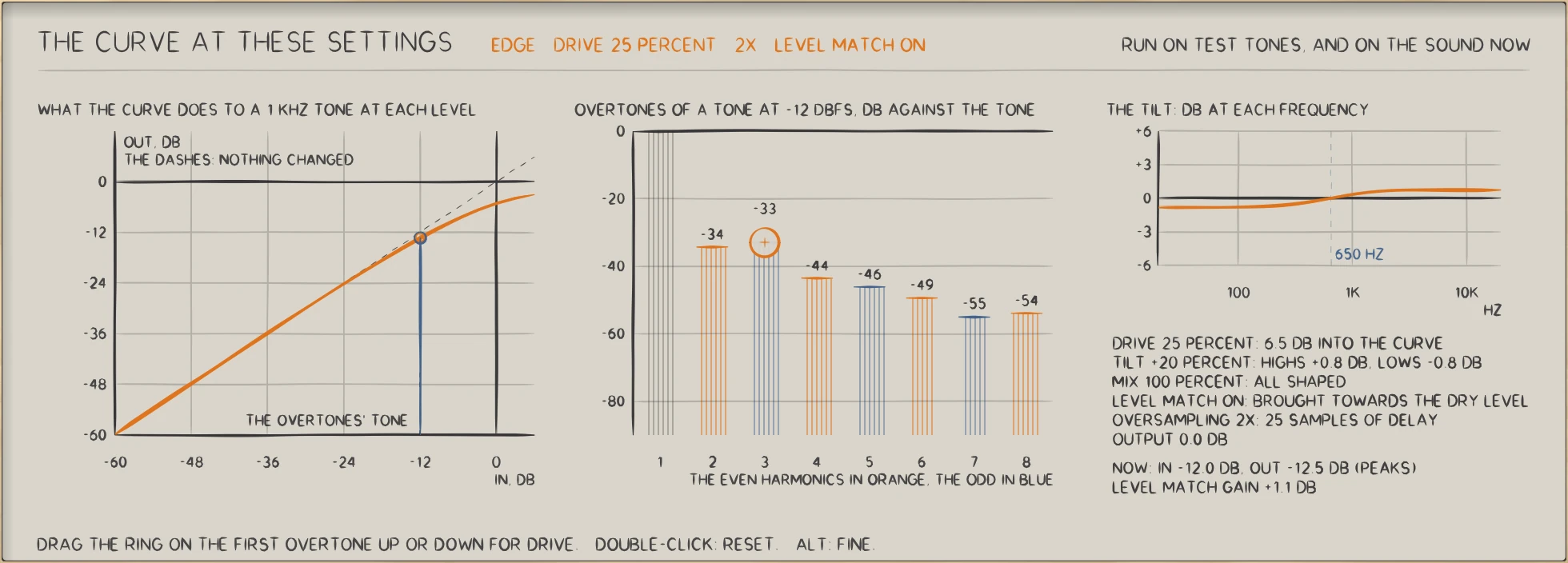
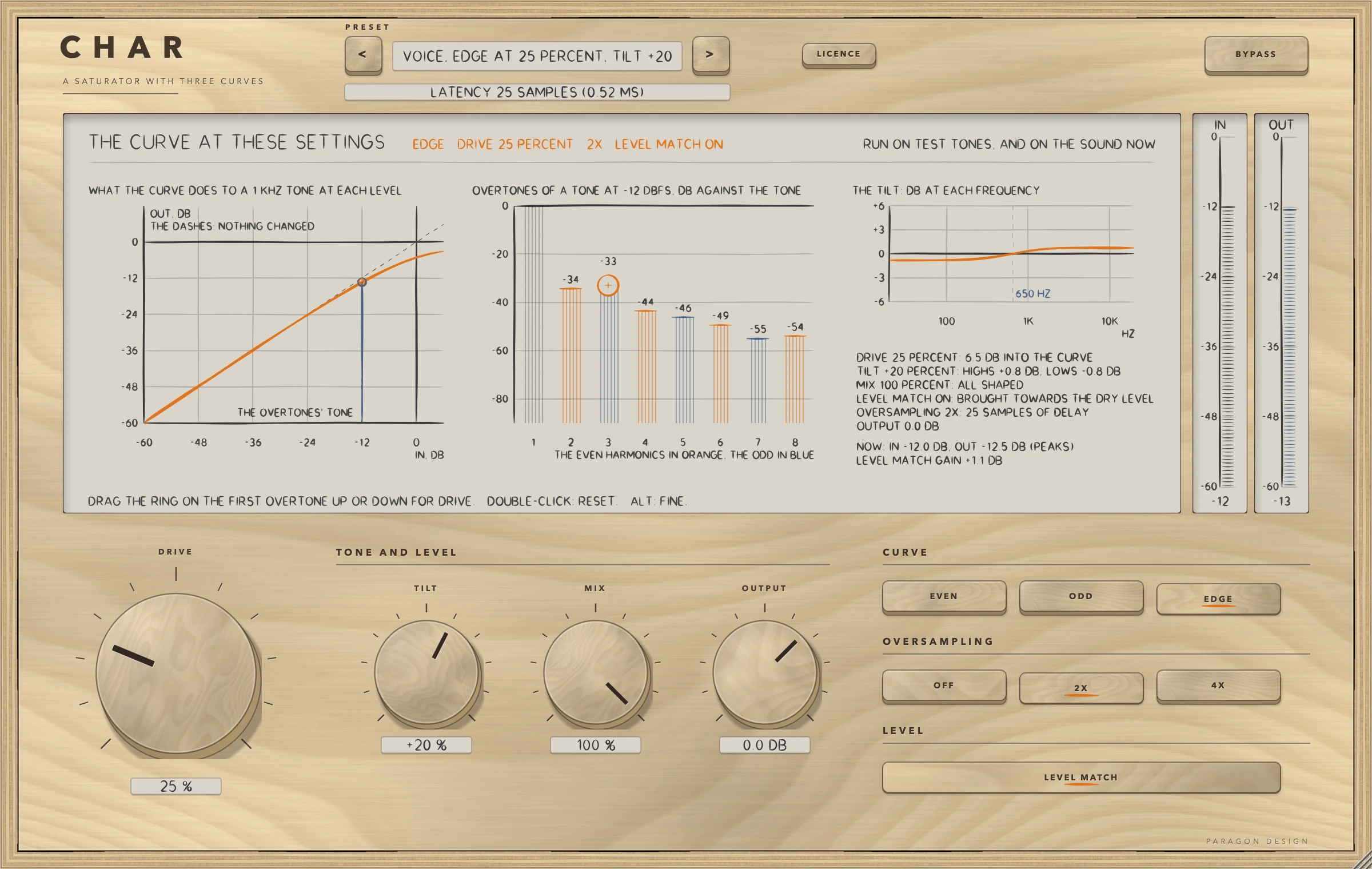
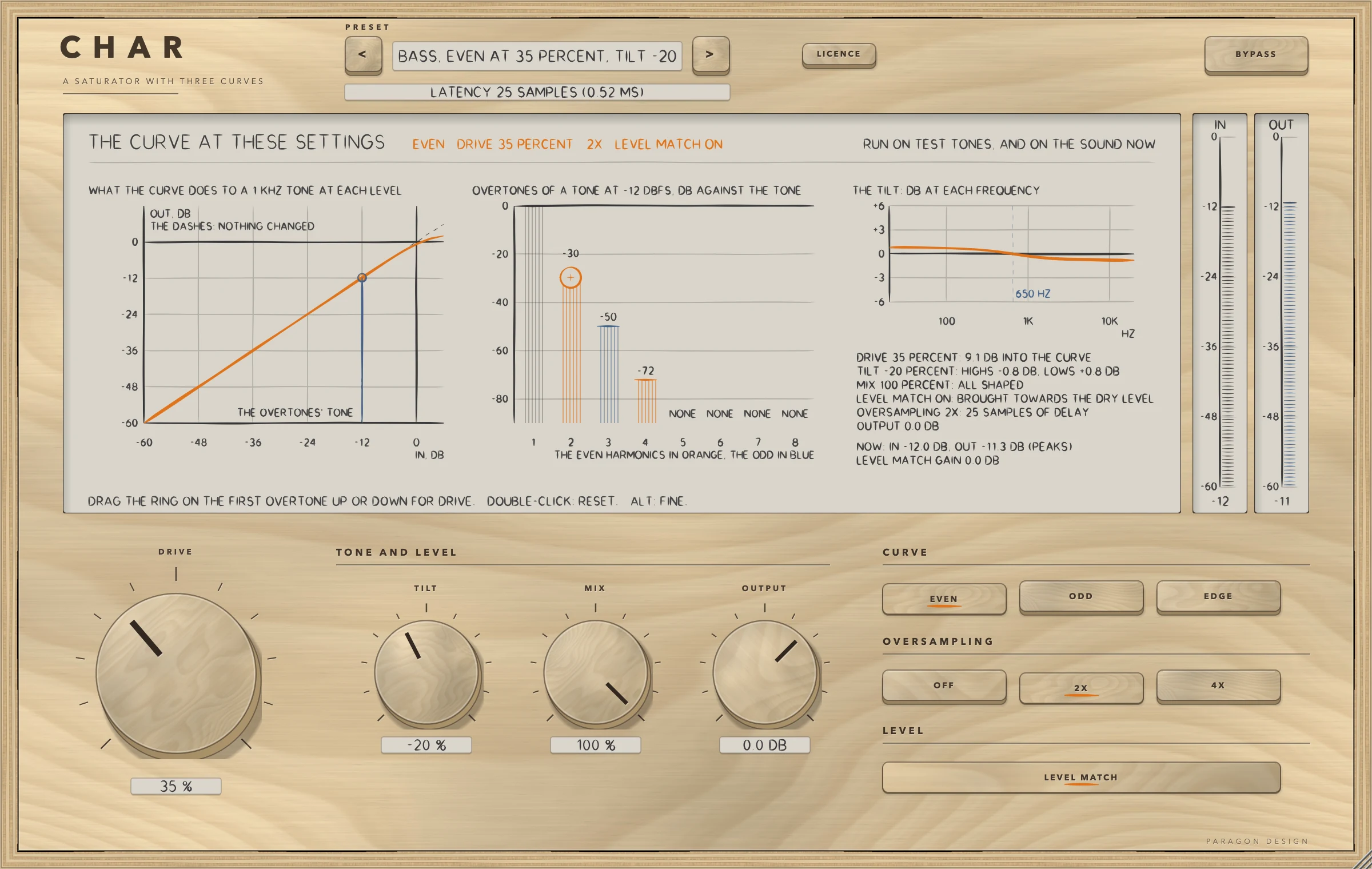
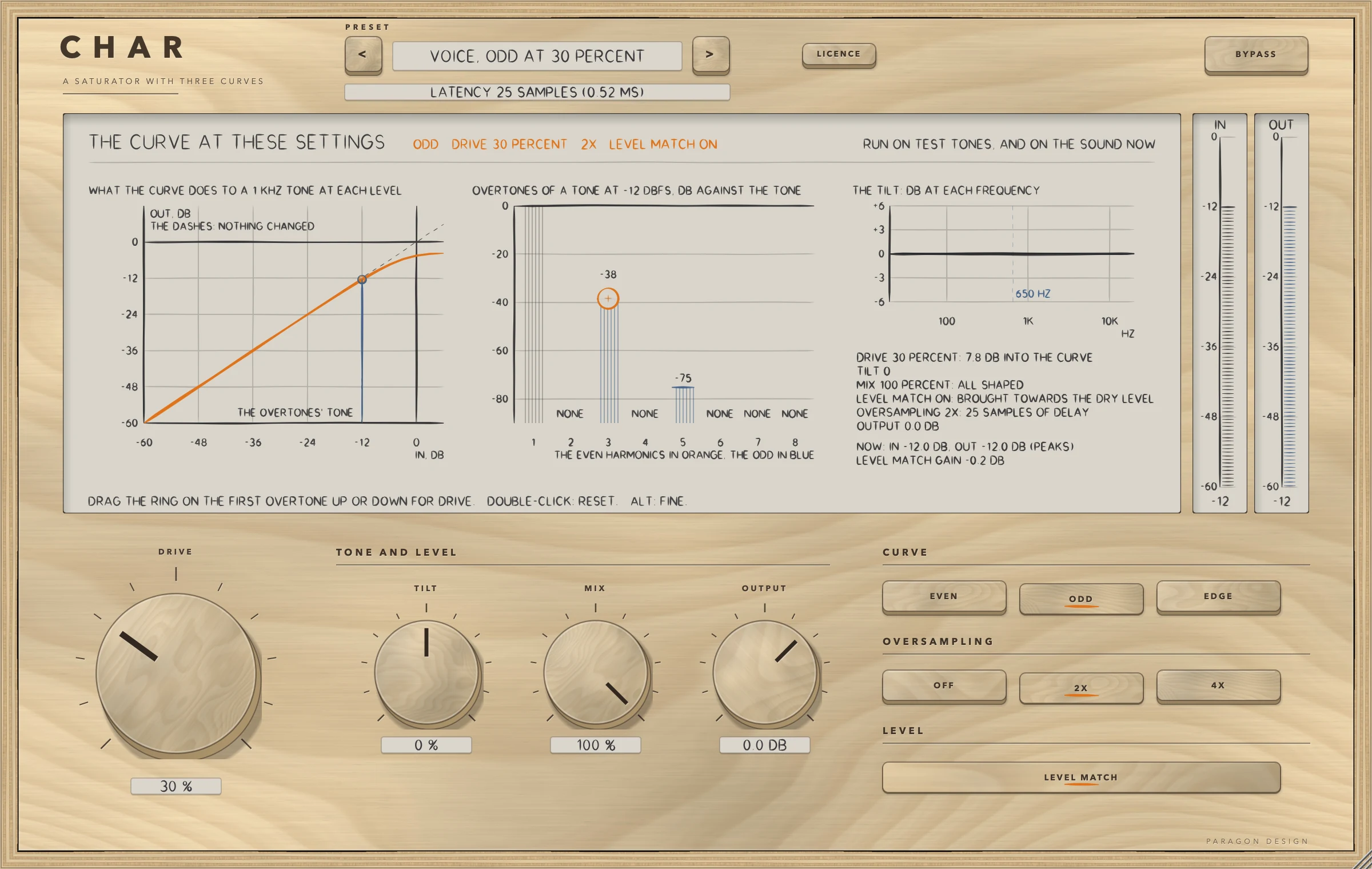
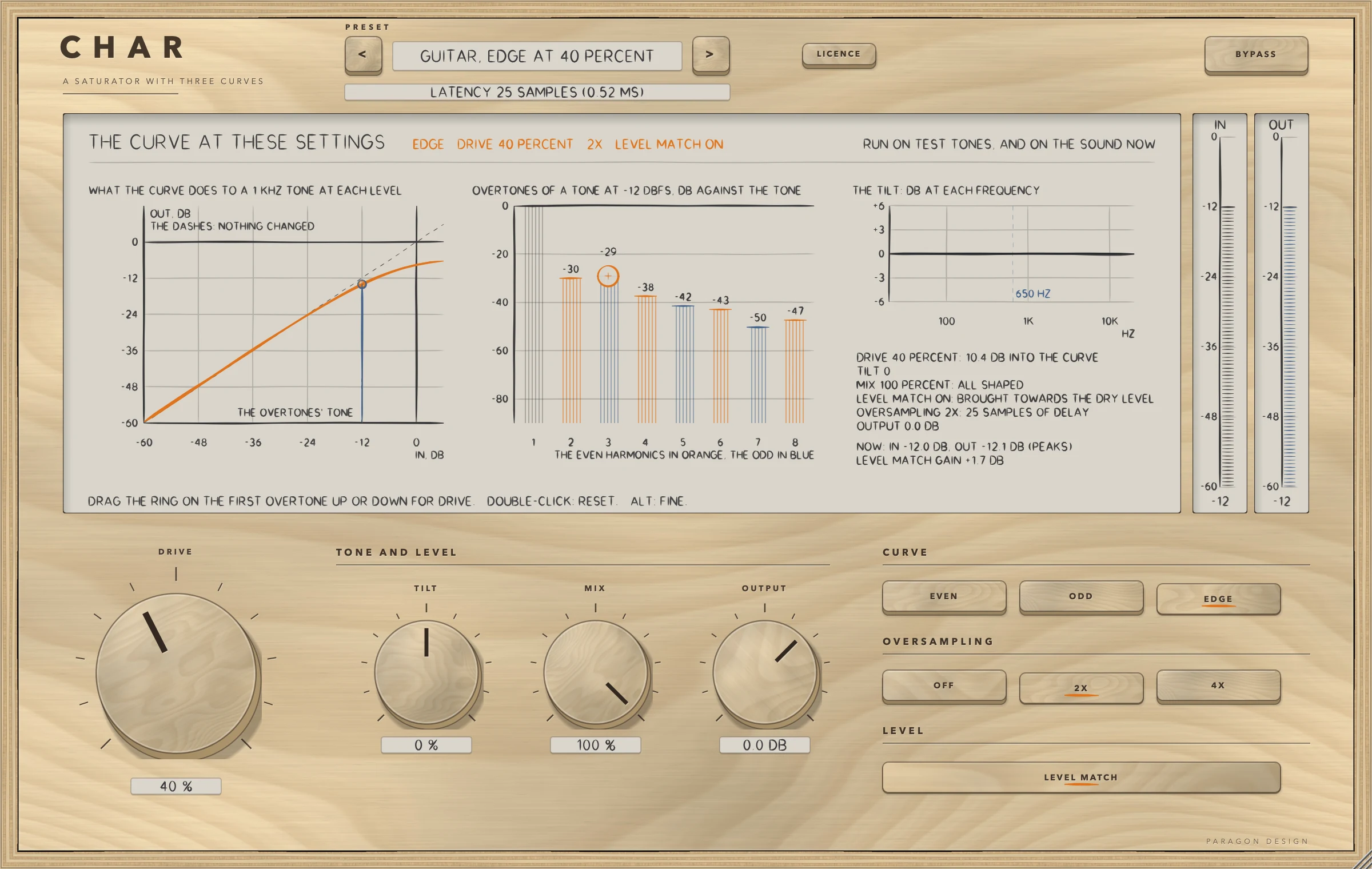
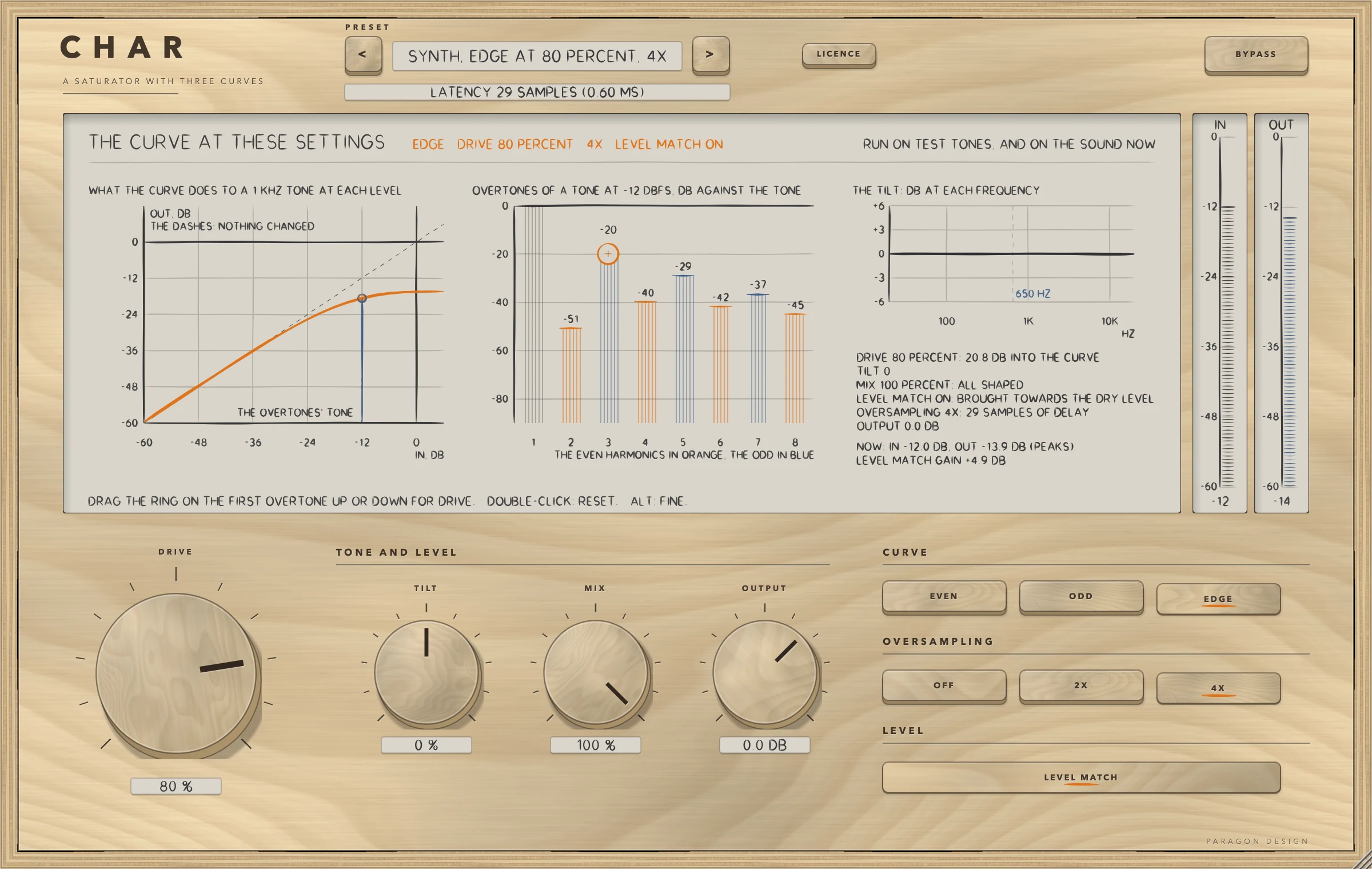
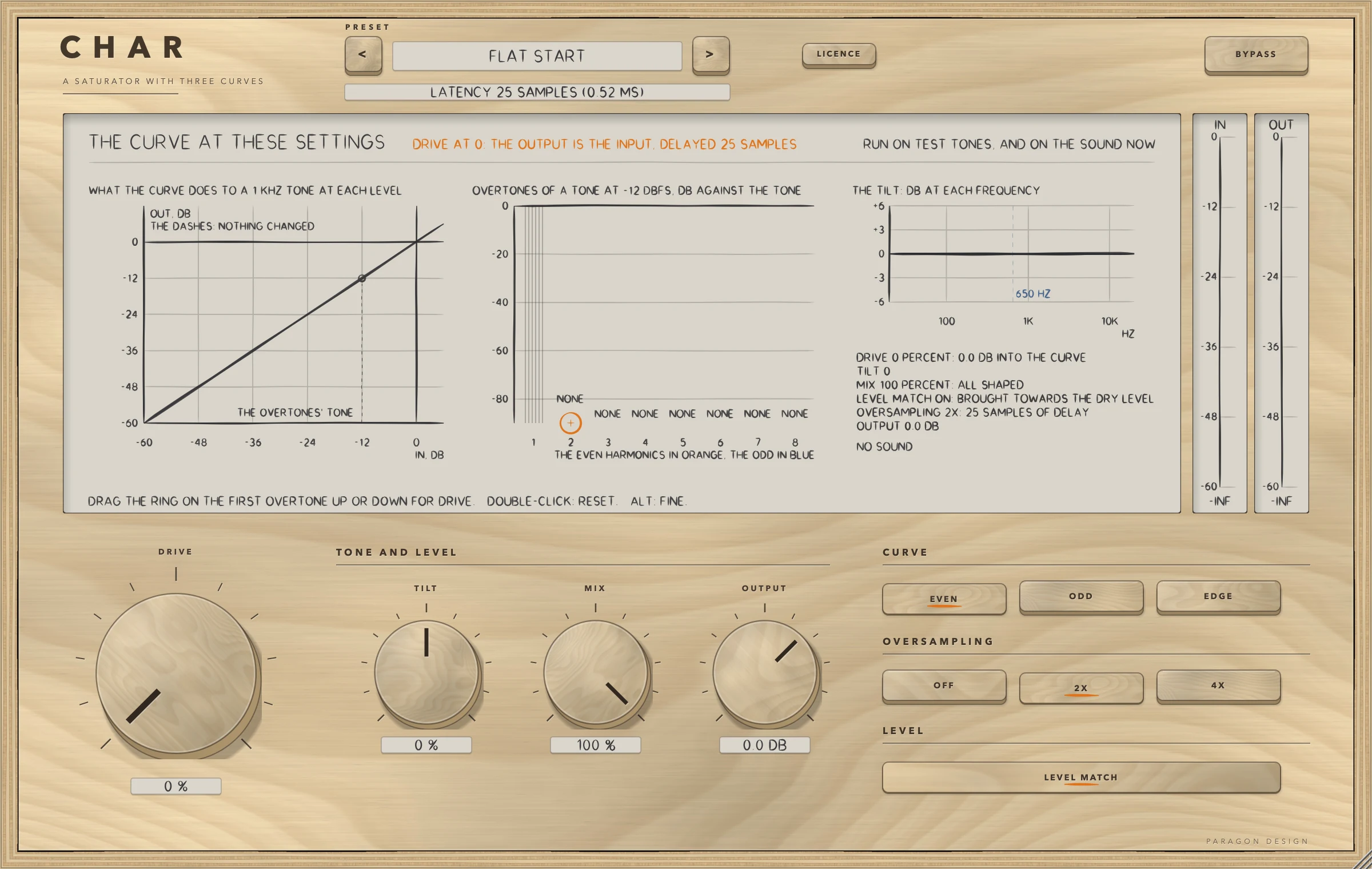
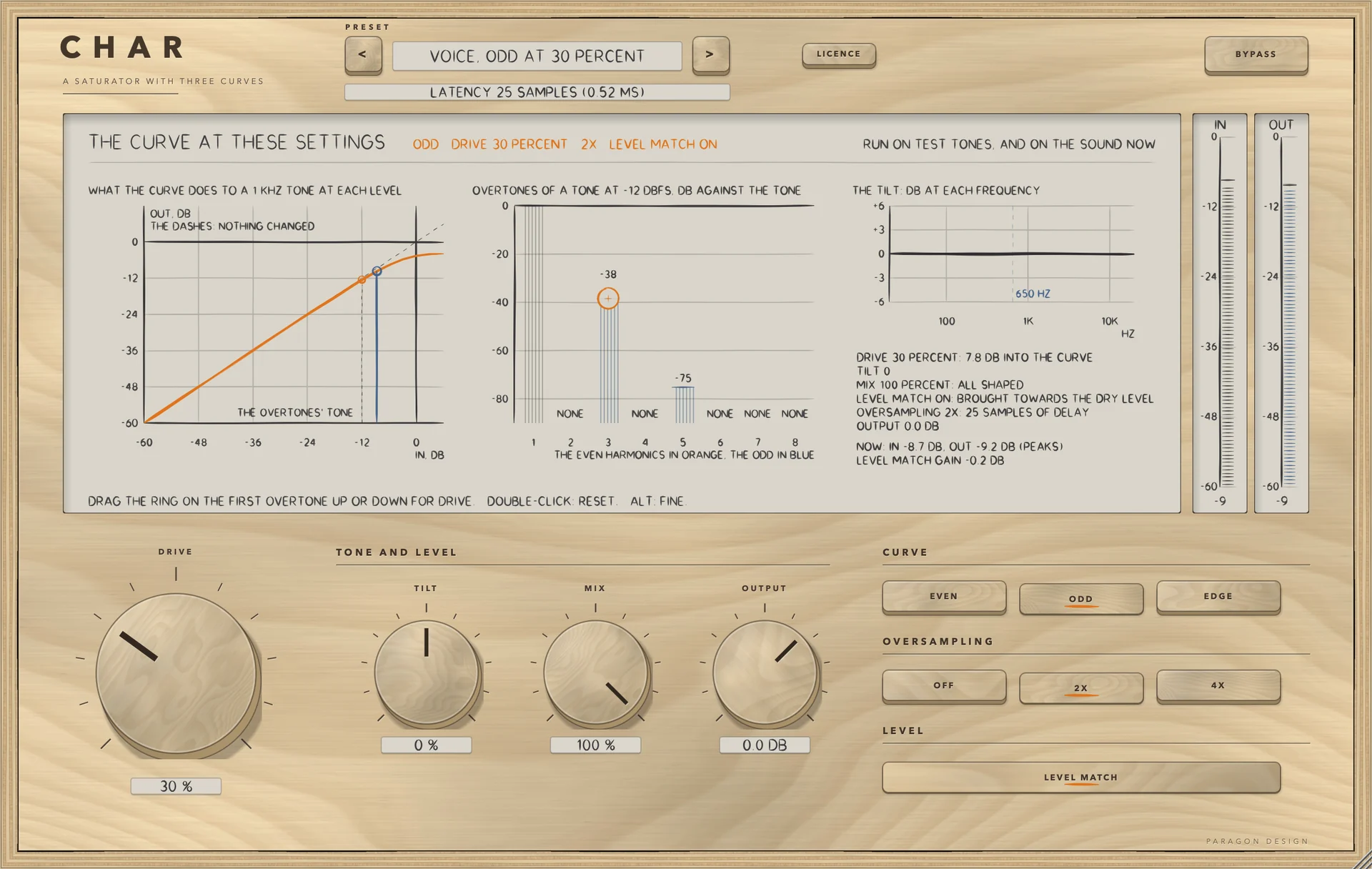
The display is one picture of three parts, all computed by the engine running test tones: the transfer curve of the settings you have chosen against the dashed line of nothing changed, the overtones of a tone at -12 dBFS in dB against the tone, and the tilt's response from 20 Hz to 20 kHz, with in words what every control asks for and, while sound passes, the peaks in and out and the gain LEVEL MATCH is applying.
Every one of the 20 presets is written as what it changes from the defaults and is held to two to four measurements, 68 in all: the second and third harmonic against the tone, the change of level, the alias, the peak and the delay. The installed Audio Unit and the engine differed in 0 of 1,152,000 samples in each of five stereo settings and 0 of 576,000 in a mono one.
- 0, 25 or 29The delay in samples the processor told the host for OVERSAMPLING OFF, 2X and 4X, at 44.1, 48, 88.2, 96, 176.4 and 192 kHz: the same number at every rate. An impulse at rest came out exactly that late.
- Bit for bitWith DRIVE 0, TILT 0 and OUTPUT 0 dB the output is the input delayed by the reported delay in 54 runs and at six sample rates, in both layouts. A denormal input number comes out as itself or 0.