CHEST · The point of it
Eight processors, your order, one delay told to the host.
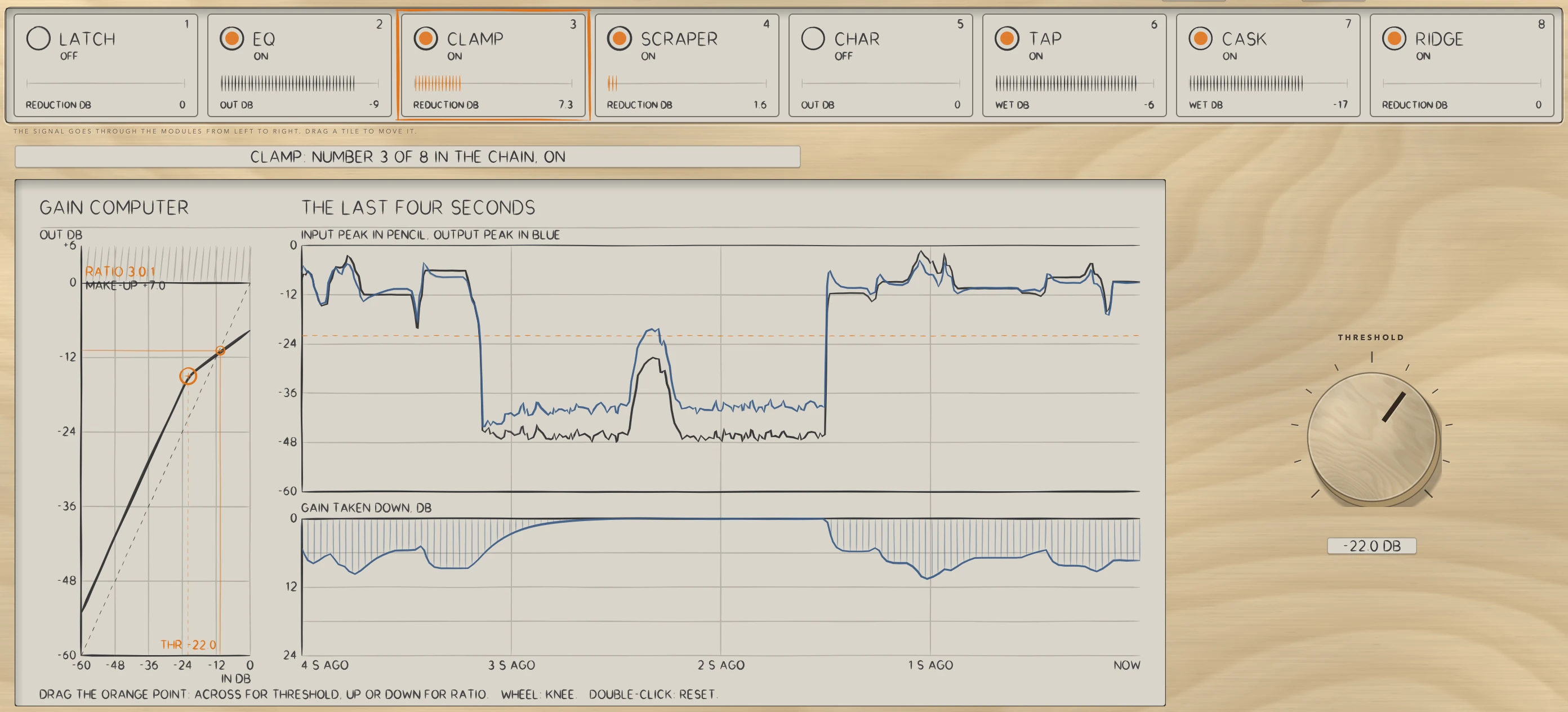
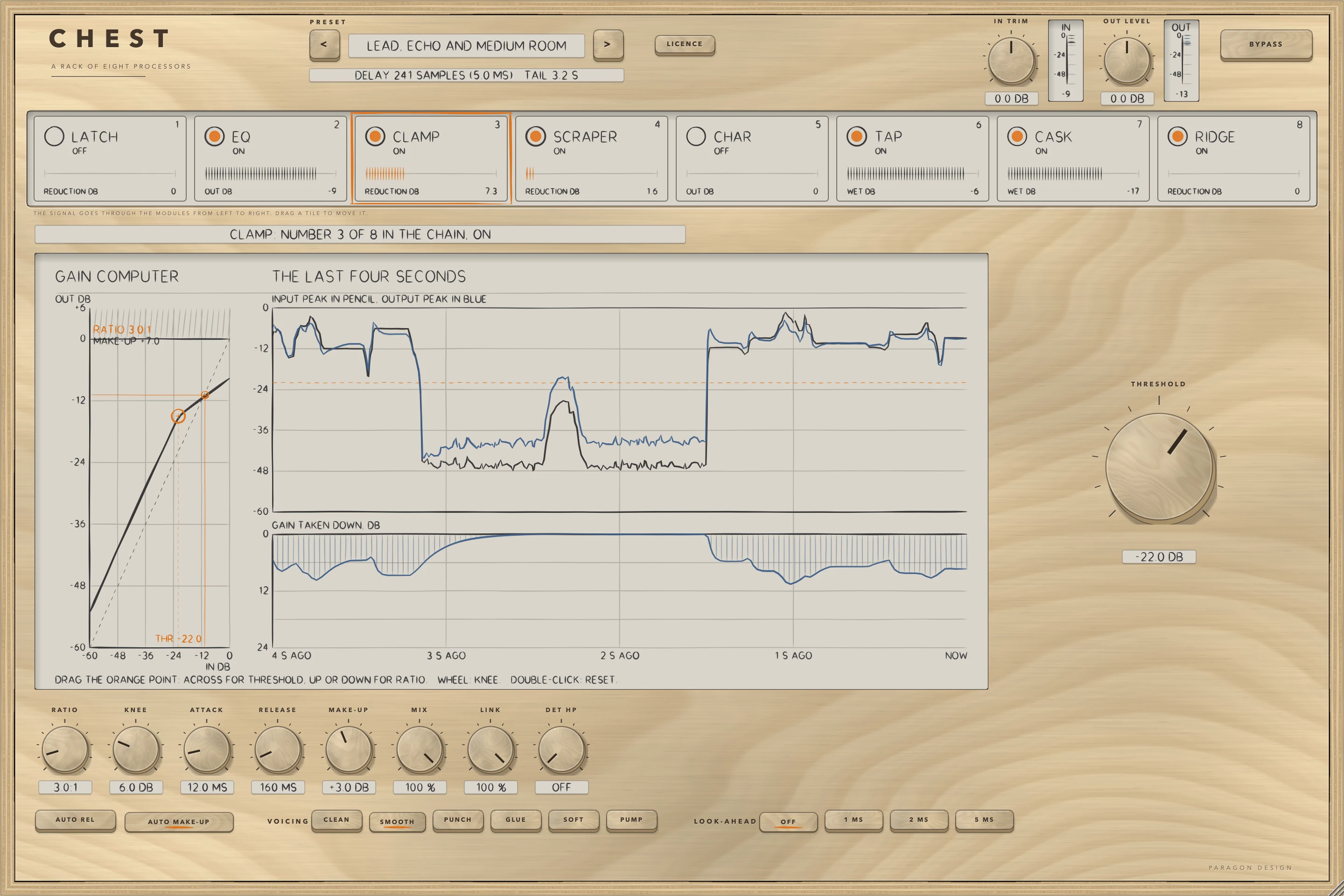
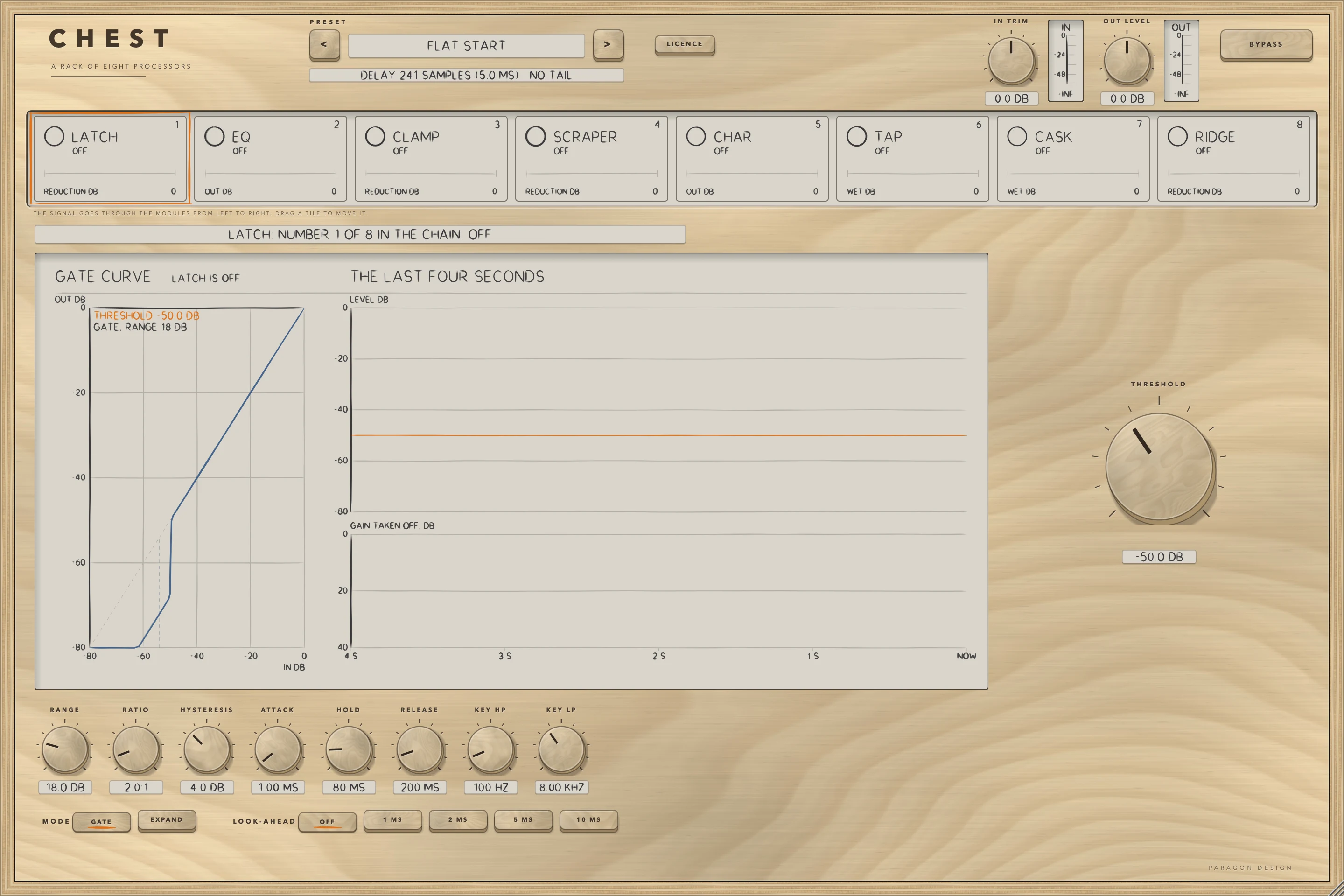
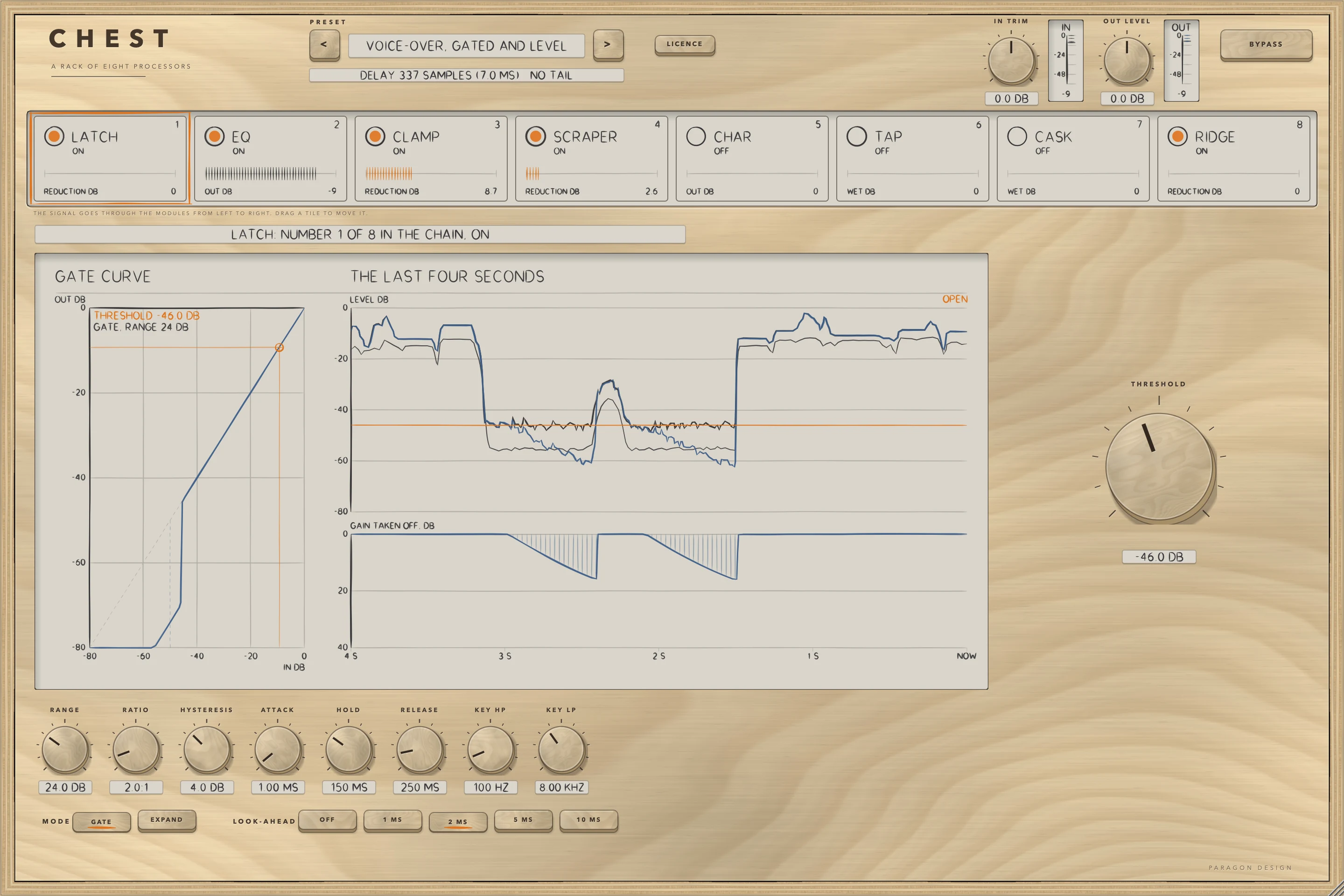
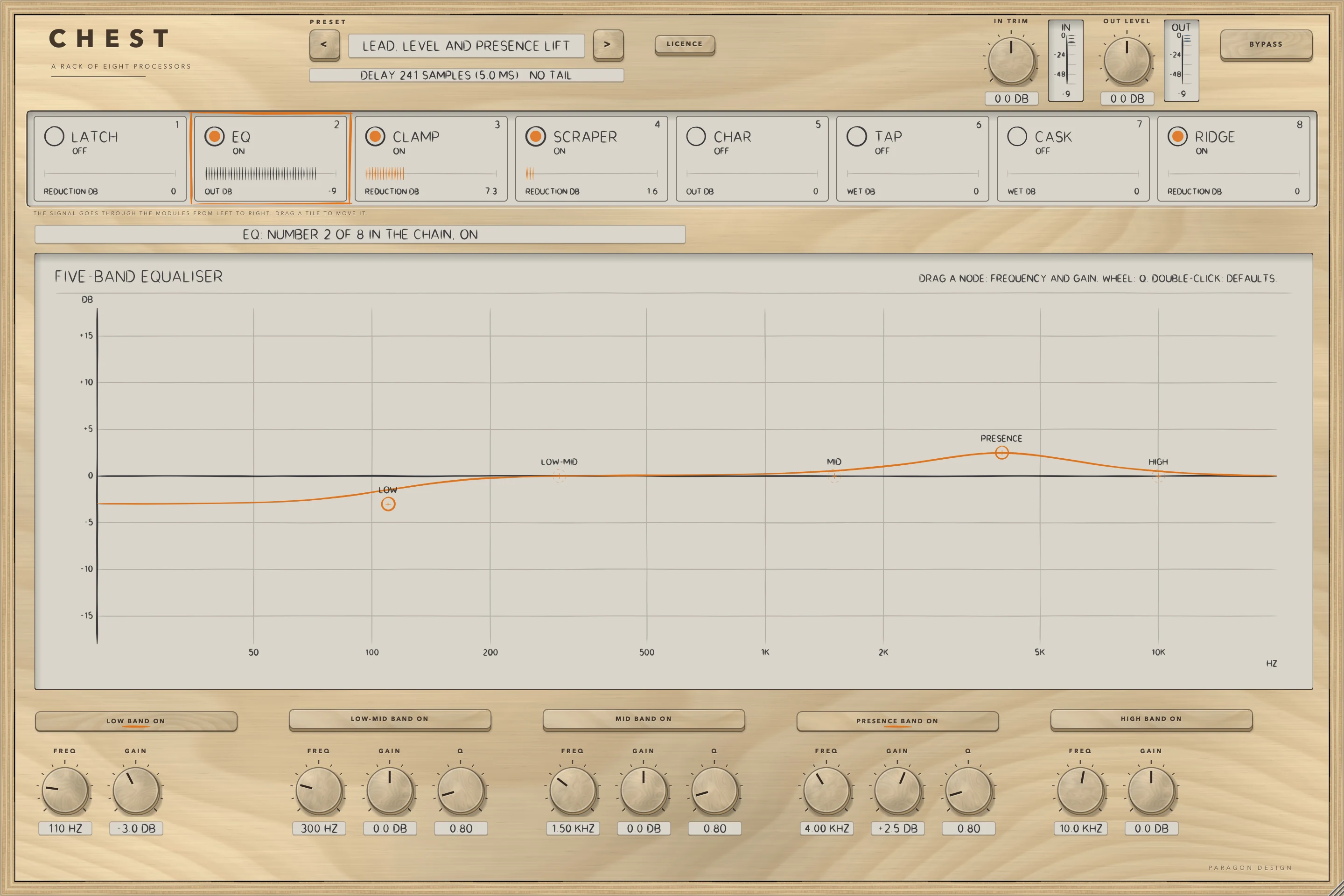
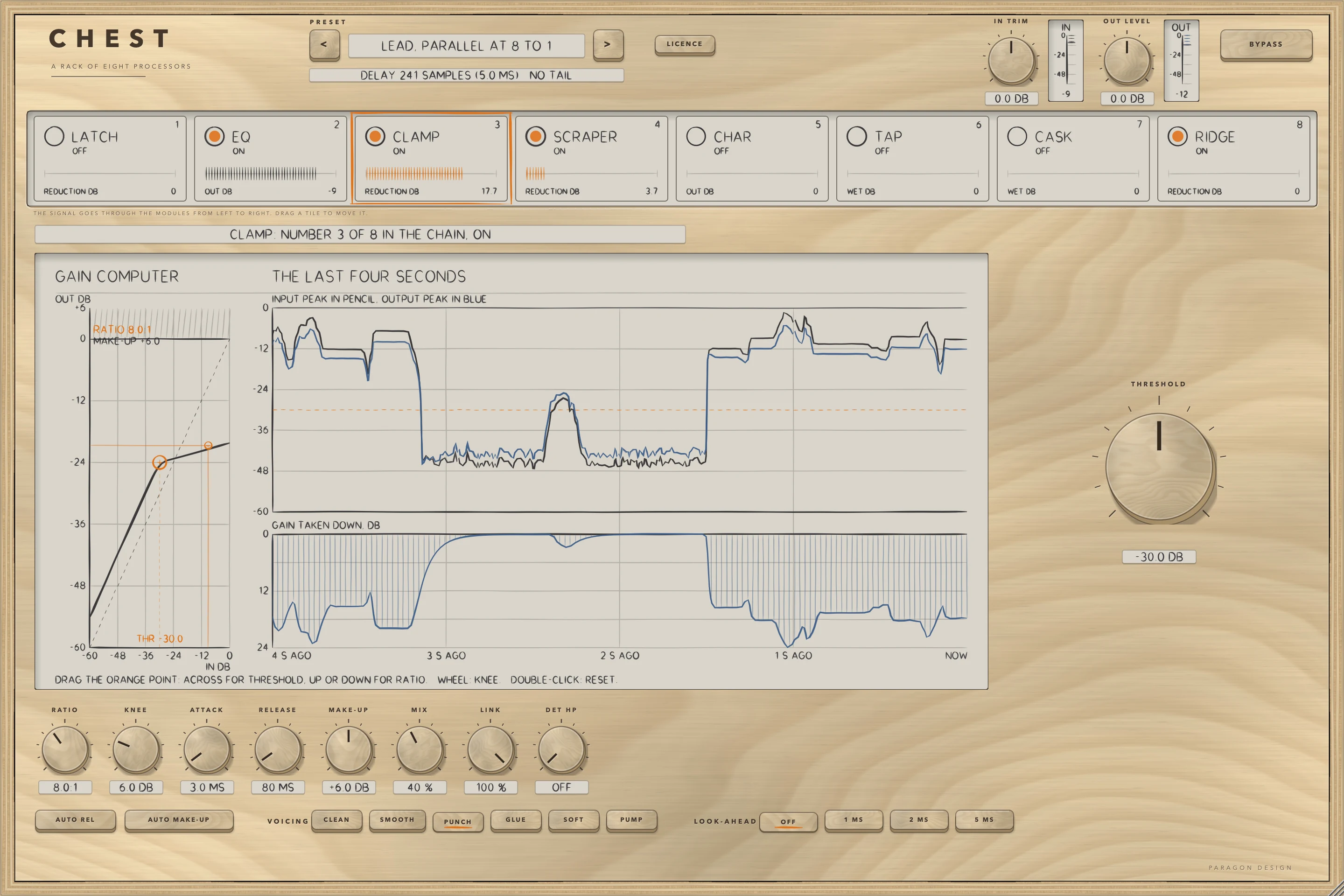
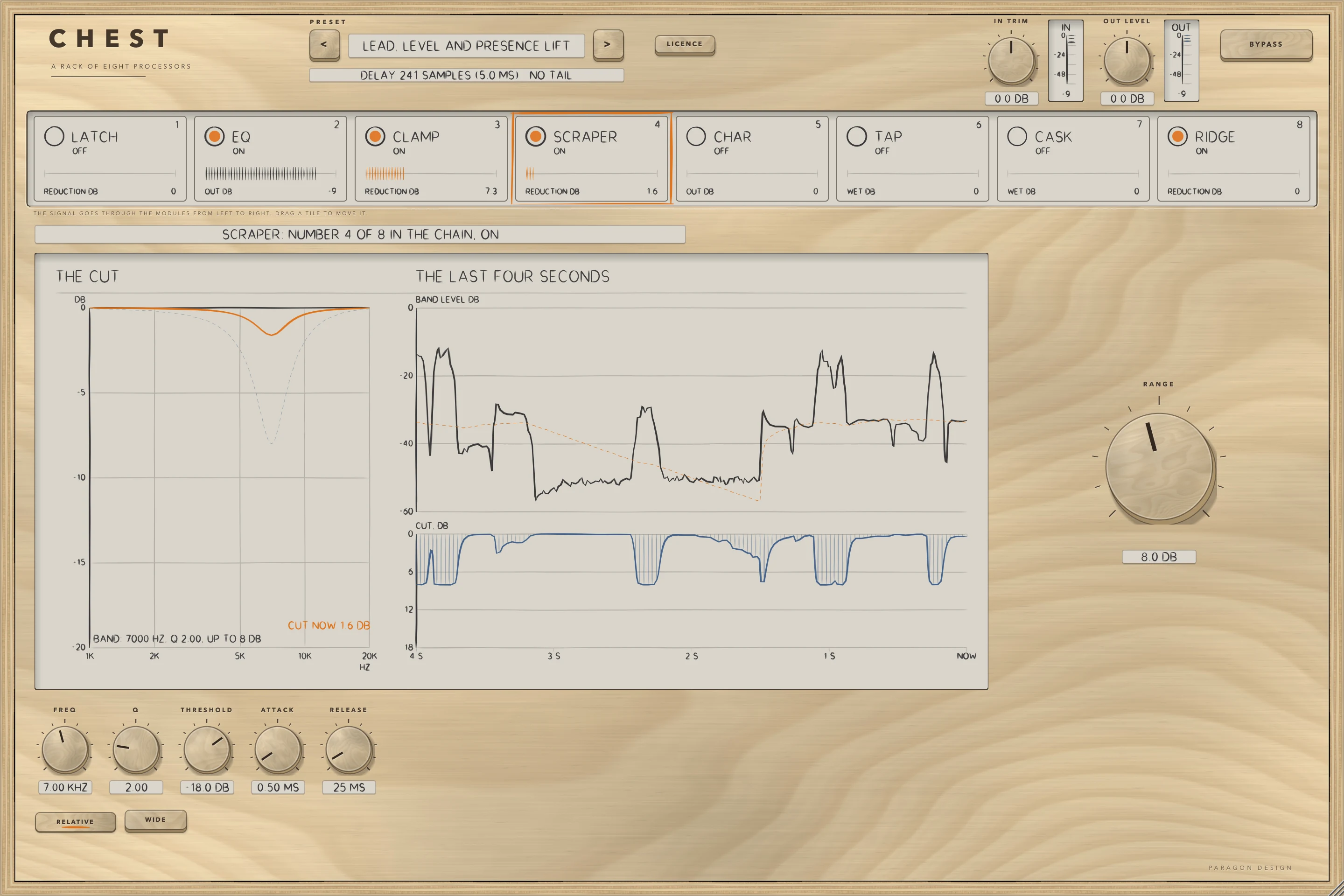
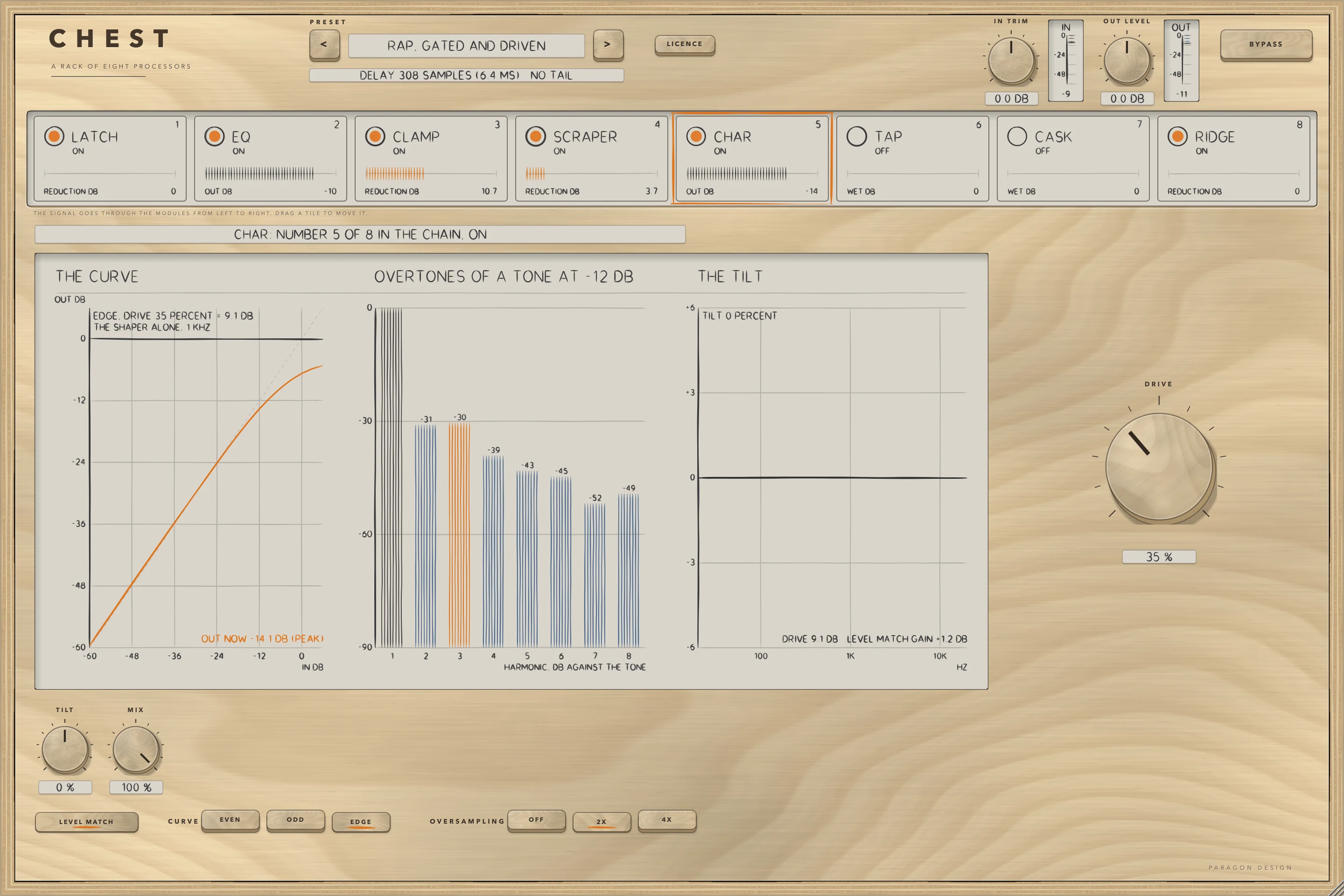
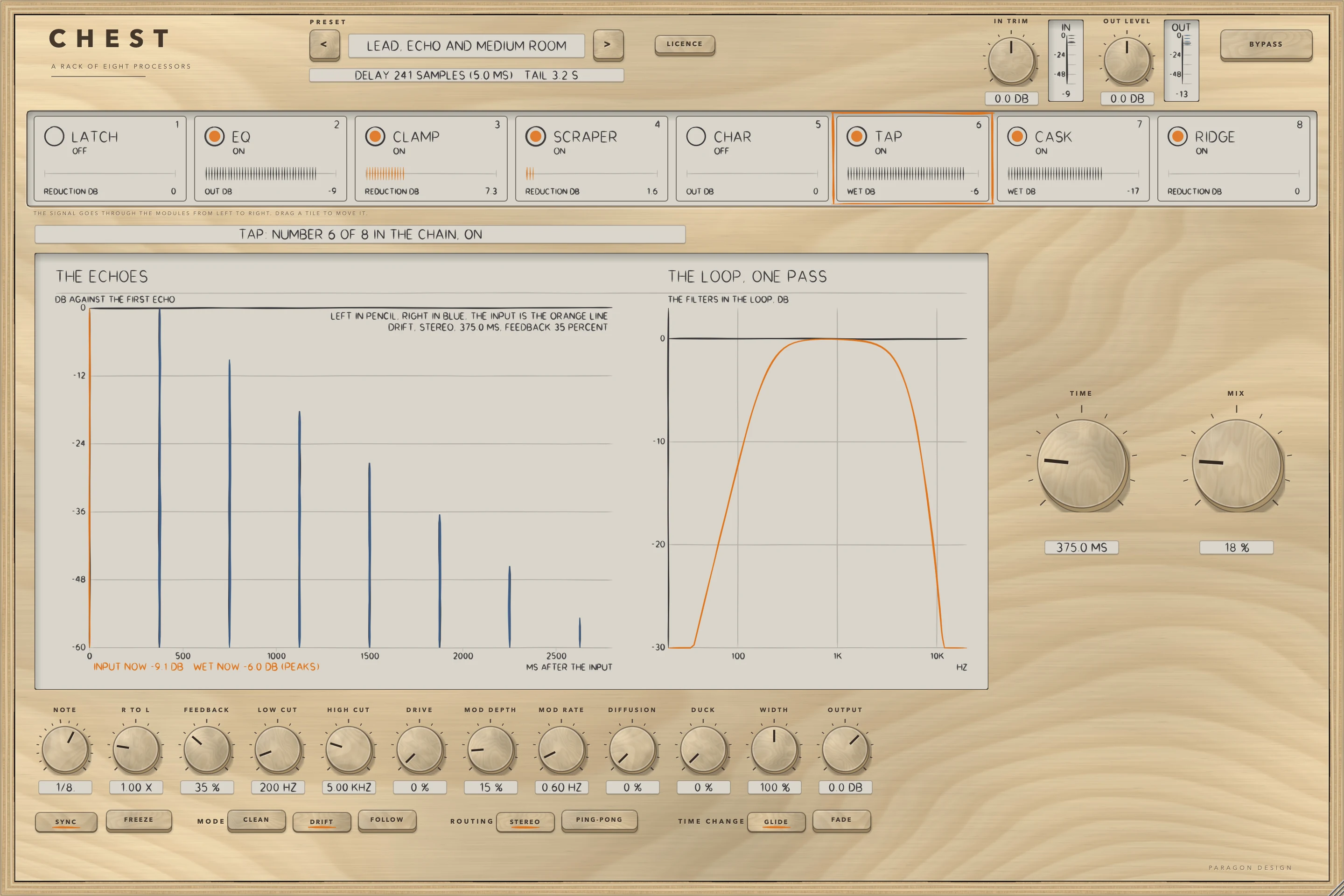
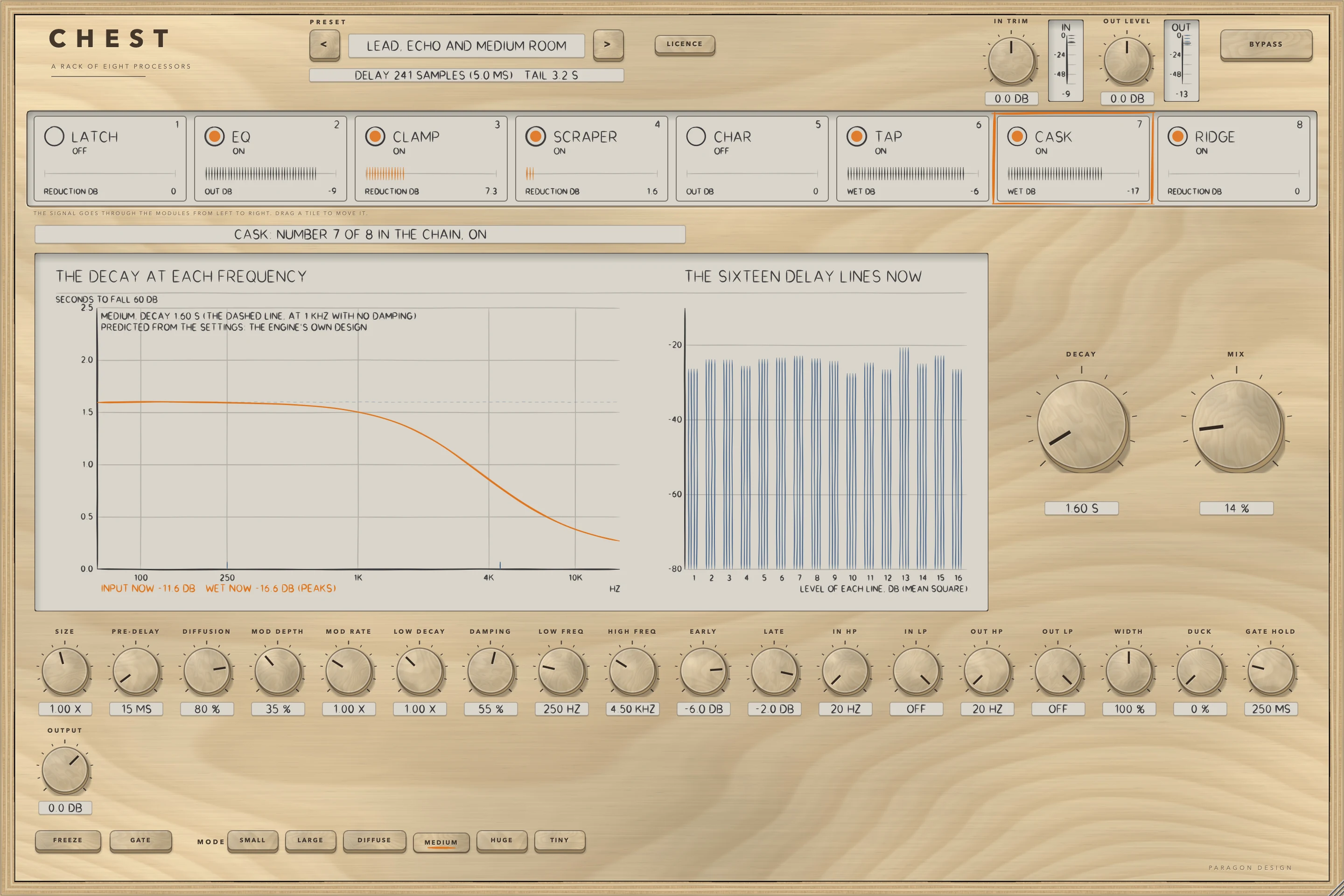
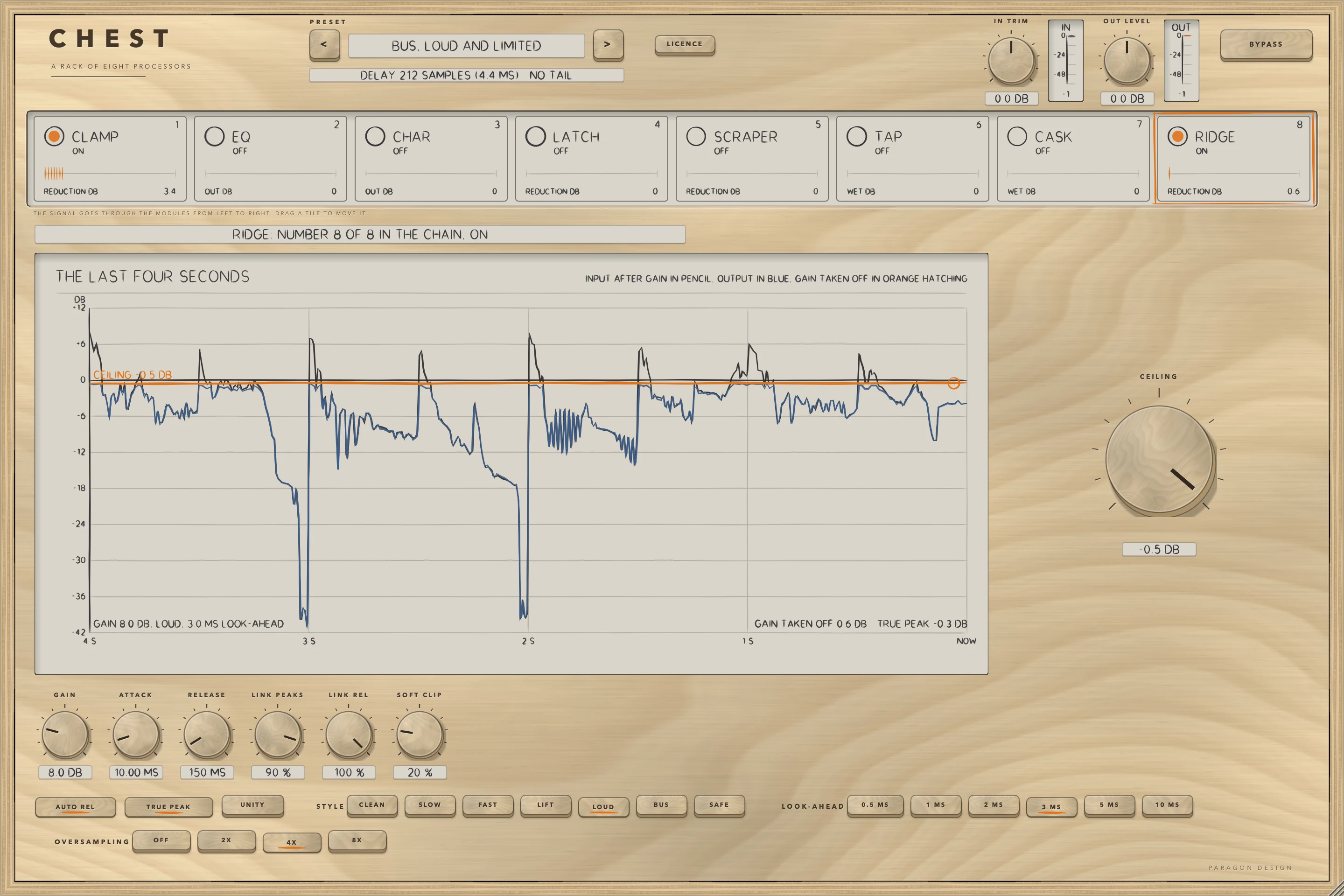
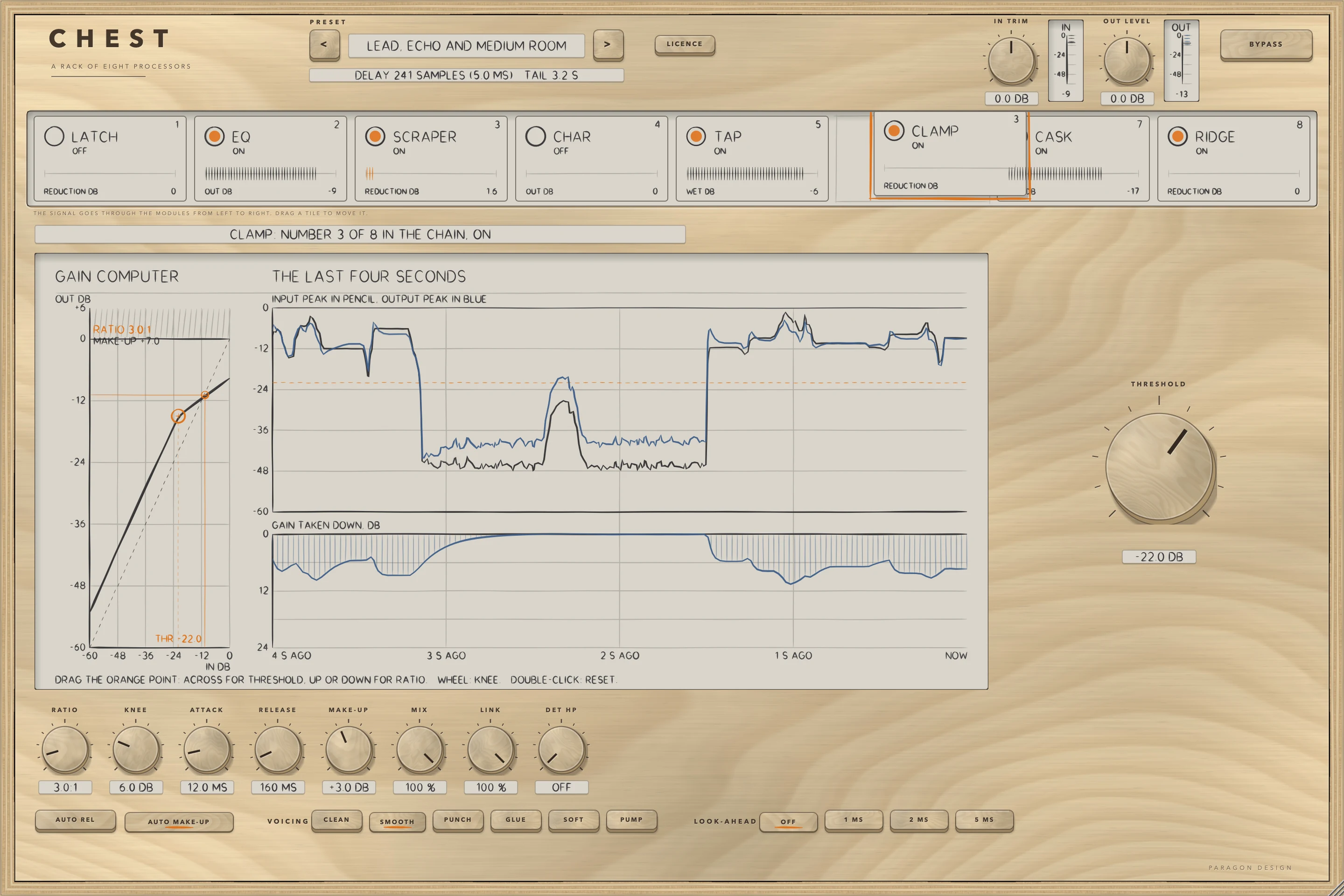
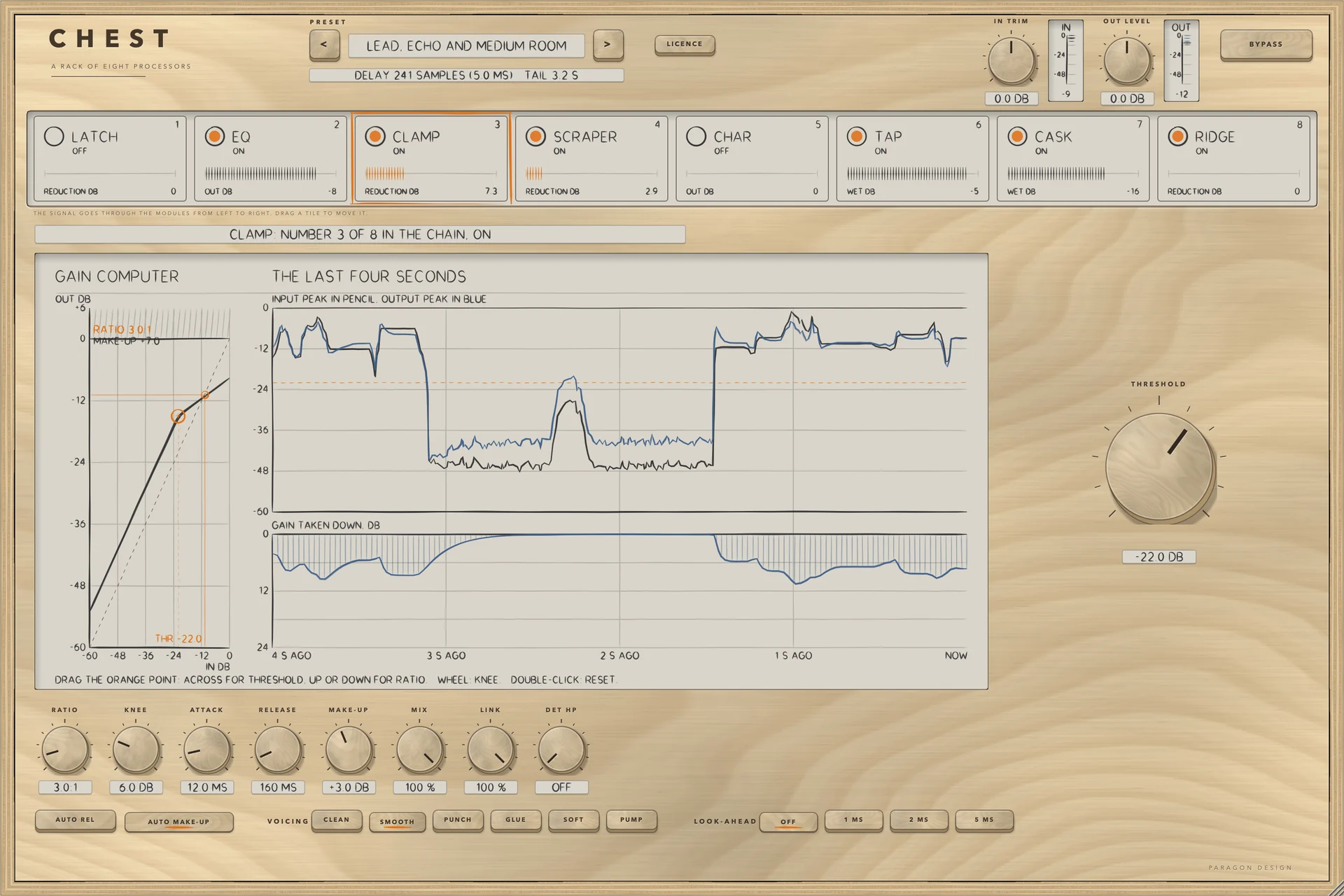
The strip shows the eight in chain order with a lamp and a live meter on each: the gain taken off for LATCH, SCRAPER, CLAMP and RIDGE, the peak level out of the module for EQ and CHAR, and the peak level of the wet for TAP and CASK. All 123 parameters come from one table, and a test holds that every control has exactly one place on the panel and that none is left over.
Every one of the 22 presets is written as what it changes from the defaults, with the order of the modules, and is held to measurements, 86 in all: how far a level moves, the reduction, the level of the wet signal, a tail and the delay. The installed Audio Unit and the rack differed in 0 samples in each of 67 runs: each module on its own, rest, chains, six sample rates and seven tempi.
- 241 samplesThe delay told to the host at the defaults at 48 kHz (229, 241, 362, 385, 626 and 673 at 44.1, 48, 88.2, 96, 176.4 and 192 kHz): the told delay, the sum of the modules' own delays and the place of an impulse are one number in 72 structures and rates. The most is 1589 samples at 48 kHz and the least 14, found by trying all 10,080 combinations of the controls that change it.
- Bit for bitAt rest, with all eight off, the default order and both levels at 0 dB, the output is the input delayed by the told delay at every block size from 1 to 4096 samples, at six sample rates and in three layouts. Each module alone equals its engine, bit for bit, in 8 modules, two settings and two orders, and all eight on in six orders equal the engines chained by hand.