RIDGE · The point of it
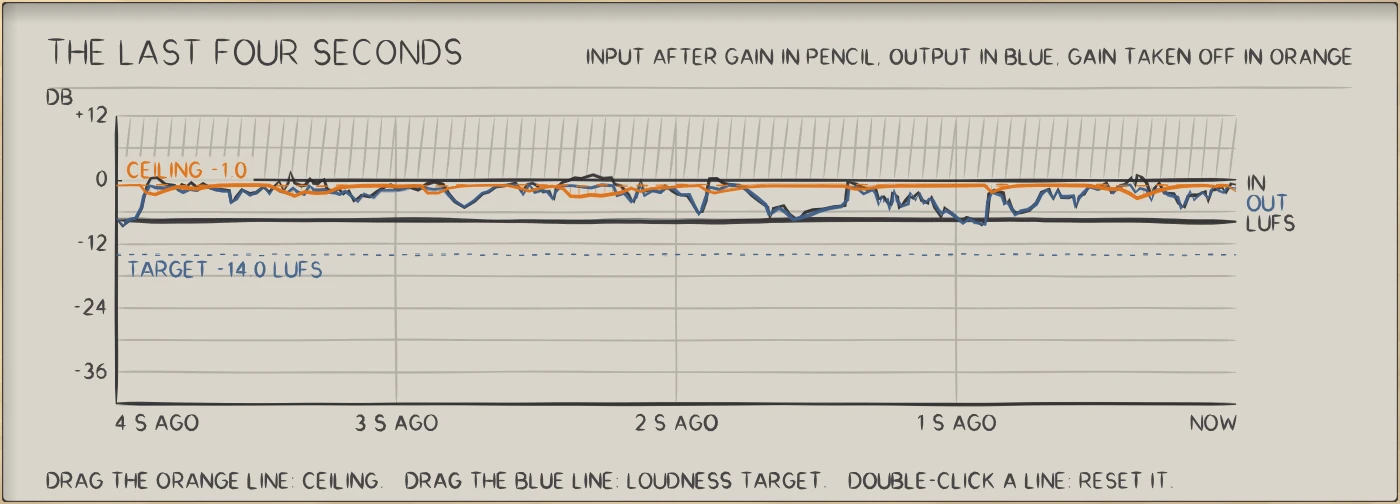
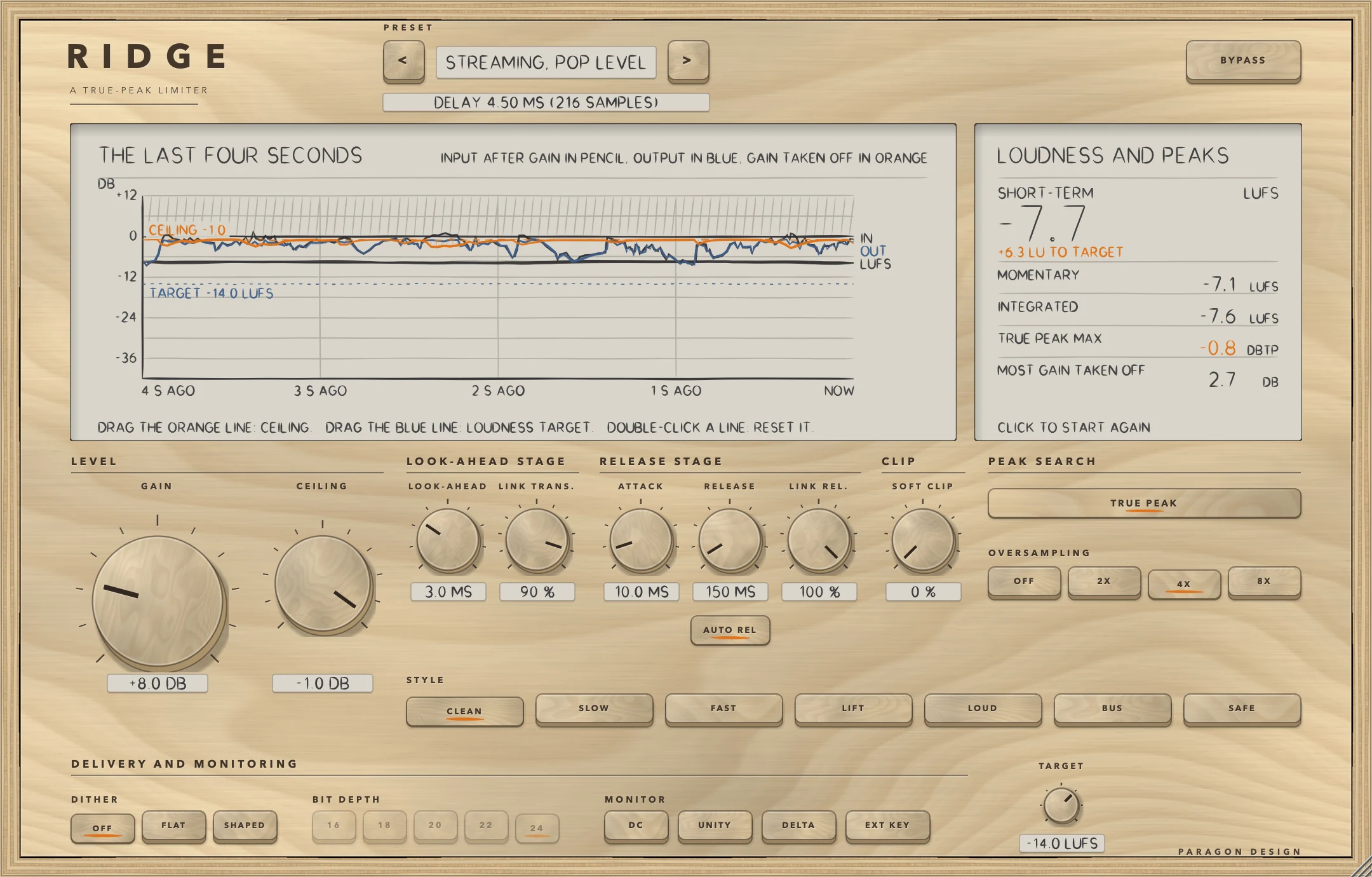
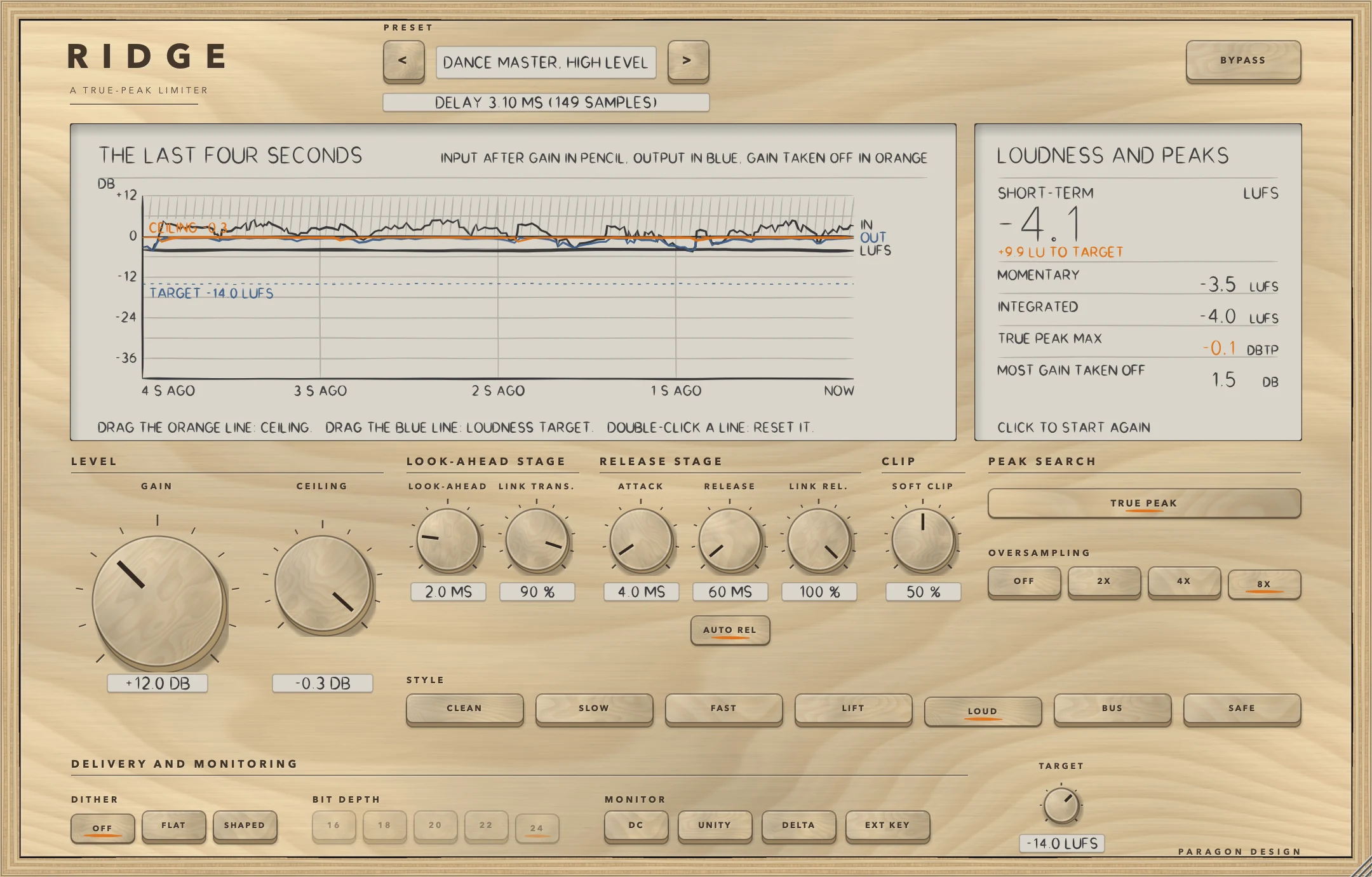
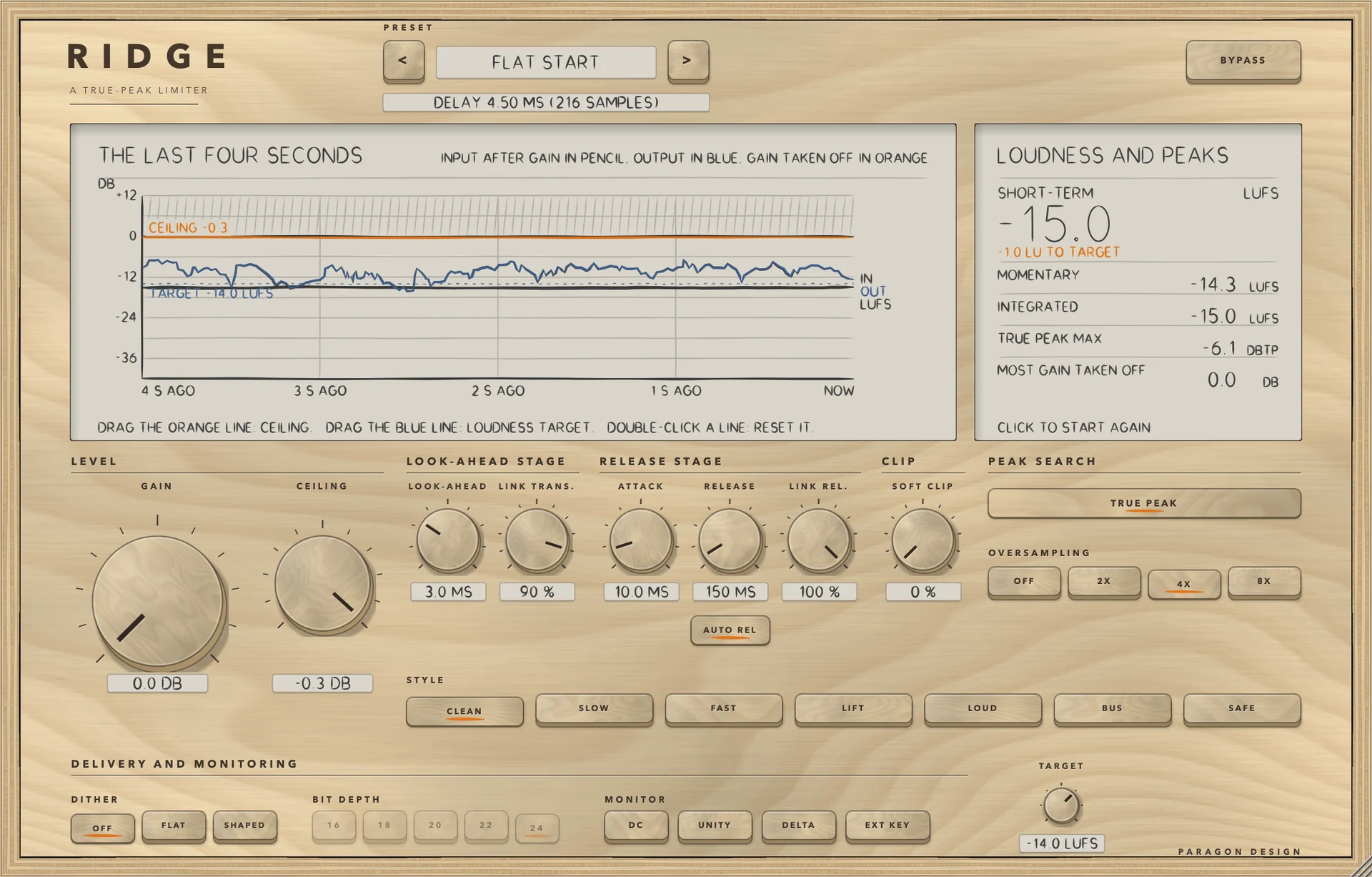
The sample peak holds the ceiling, and the readout says how far the true peak strays.
The sample peak is the ceiling, with dither and the external key off, to the last digit of the gain arithmetic: in 108 settings spread over every style, look-aheads from 0.1 to 10 ms, oversampling from off to 8X and the soft clip off, half and full, band-limited programme driven 14 dB into a -1 dB ceiling ended at -1.0000 dB. The ceiling held the same on drum bursts and pink noise (-1.0000 dB), and a full-scale square wave stayed no more than 0.01 dB over a -0.3 dB ceiling.
The true peak is not the ceiling, and RIDGE says by how much. Read with an interpolator that is not the one inside it, a band-limited programme at 4X ended up to 0.141 dB over a -1 dB ceiling (LOUD, the worst style; the others 0.020 to 0.039). Full-band noise driven 14 dB in is the worst case, 0.749 dB over at 2X and 4X.
- -1.0000 dBThe largest sample peak over 108 settings of style, look-ahead, oversampling and soft clip, on band-limited programme driven 14 dB into a -1 dB ceiling. The ceiling held the same on drum bursts and pink noise, and a full-scale square wave stayed no more than 0.01 dB over a -0.3 dB ceiling.
- 0.141 dBHow far the true peak ended over a -1 dB ceiling at 4X, worst style (LOUD), on band-limited programme, read with an interpolator that is not the one inside RIDGE (limit 0.15 dB). Full-band noise is worse: 0.749 dB over at 2X and 4X.